Dunhuang Mogao Grottoes Travel Guide 2026 | Tickets, Caves & Tips
Explore the Dunhuang Mogao Grottoes in Gansu, China. Discover cave art, Silk Road history, ticket information, travel routes, best visiting time, and essential travel tips.
Civilization Carved in the Desert
The Dunhuang Mogao Grottoes are a must-visit destination in Gansu travel. You may have heard that many archaeologists traveled to Dunhuang and collected a large number of cultural relics, and you may have already admired some of these artifacts in the British Museum. Welcome to visit the Mogao Grottoes and gain a deeper understanding of the history and culture of the Silk Road.
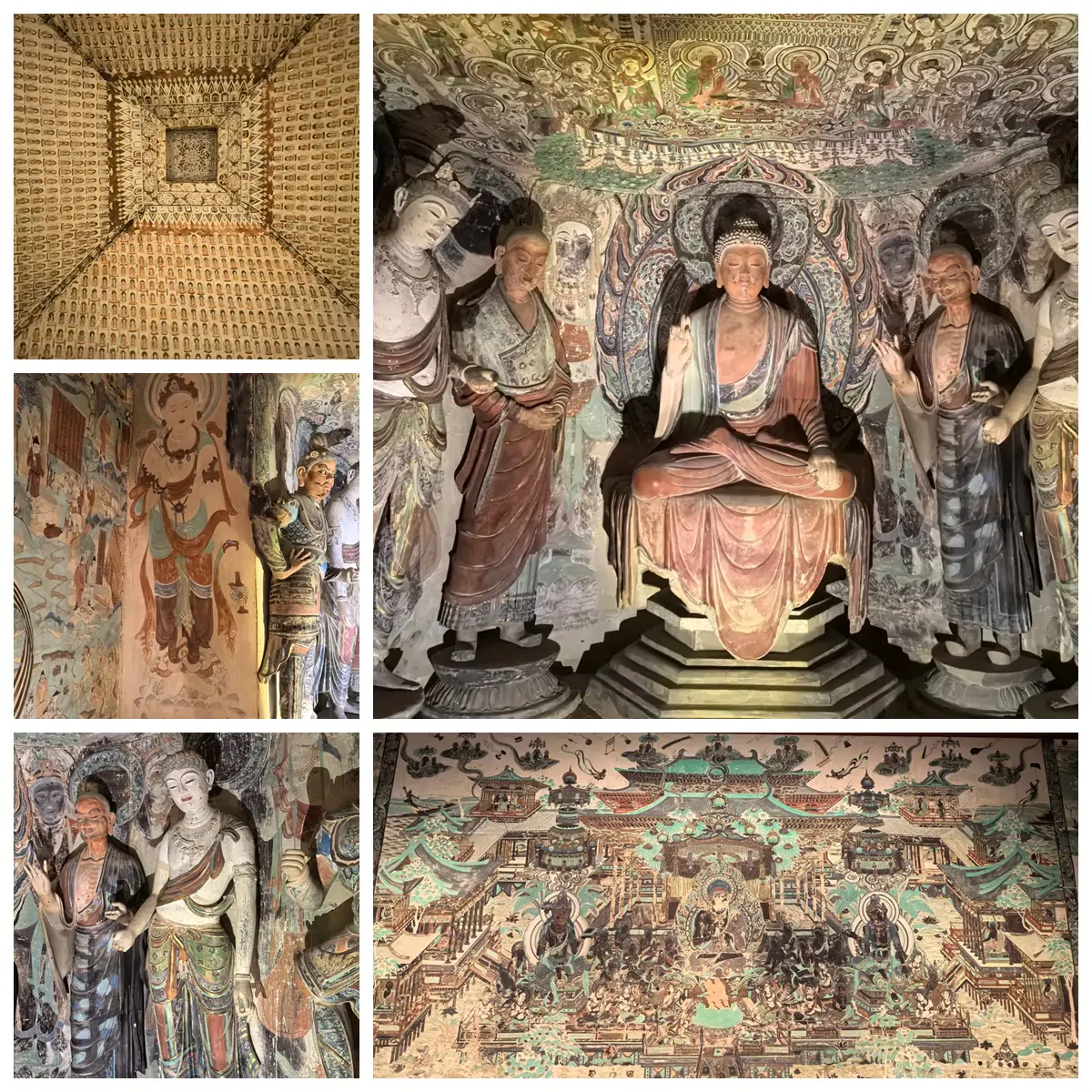
The Dunhuang Mogao Grottoes, also known as the Thousand Buddha Caves, are located in Dunhuang City, Gansu Province, China. They are a treasure house of Buddhist cave art carved from the period of the Sixteen Kingdoms to the Yuan Dynasty, lasting for about one thousand years. The caves are distributed at varying heights in a dense arrangement, with up to five levels stacked vertically, and are world-famous for their exquisite murals and painted sculptures. As the world’s largest treasure house of Buddhist art, the Mogao Grottoes not only contain the traditional culture and art of ancient China and the Western Regions, but are also praised as the “Oriental Art Treasure House” because of the richness and brilliance of their murals and painted sculptures, as well as the depth and breadth of their content.
Location
The Dunhuang Mogao Grottoes are located about 25 kilometers southeast of Dunhuang City, Jiuquan City, Gansu Province, China, at approximately 40°02′ north latitude and 94°48′ east longitude. Situated at the western end of the Hexi Corridor, this area connects Qinghai to the south and Xinjiang to the west, serving as a strategic gateway on the ancient Silk Road.
Cultural History
In 1987, the Mogao Grottoes were listed as a UNESCO World Cultural Heritage Site and became world-famous for their scale, artistic value, and historical significance.
Dunhuang is located at the western end of the Hexi Corridor and served as a key passage on the Silk Road. In 366 AD (the second year of Jianyuan during the Former Qin Dynasty), the monk Lezun excavated the first cave. During the Western Han Dynasty, Dunhuang was officially incorporated into the territory of the Central Plains with administrative and military establishments. From the Wei and Jin Dynasties onward, Buddhism flourished and the excavation of the Mogao Grottoes began. The Sui and Tang Dynasties marked the peak period, when Dunhuang became a core center for trade, culture, and religious exchange between China and the West. After the late Tang Dynasty, the site gradually declined due to changing political powers. However, a large number of cave murals and cultural relics remained, serving as historical witnesses to the integration of Eastern and Western civilizations. Although some construction continued during the Northern Song Dynasty, the Mogao Grottoes gradually declined as the Silk Road's importance waned and Dunhuang's economy declined. Excavation activities ceased after the Yuan Dynasty. The Mogao Grottoes went through sixteen historical periods, from the Northern Wei Dynasty to the Western Xia Dynasty, continuing for more than one thousand years until completion in the Yuan Dynasty.
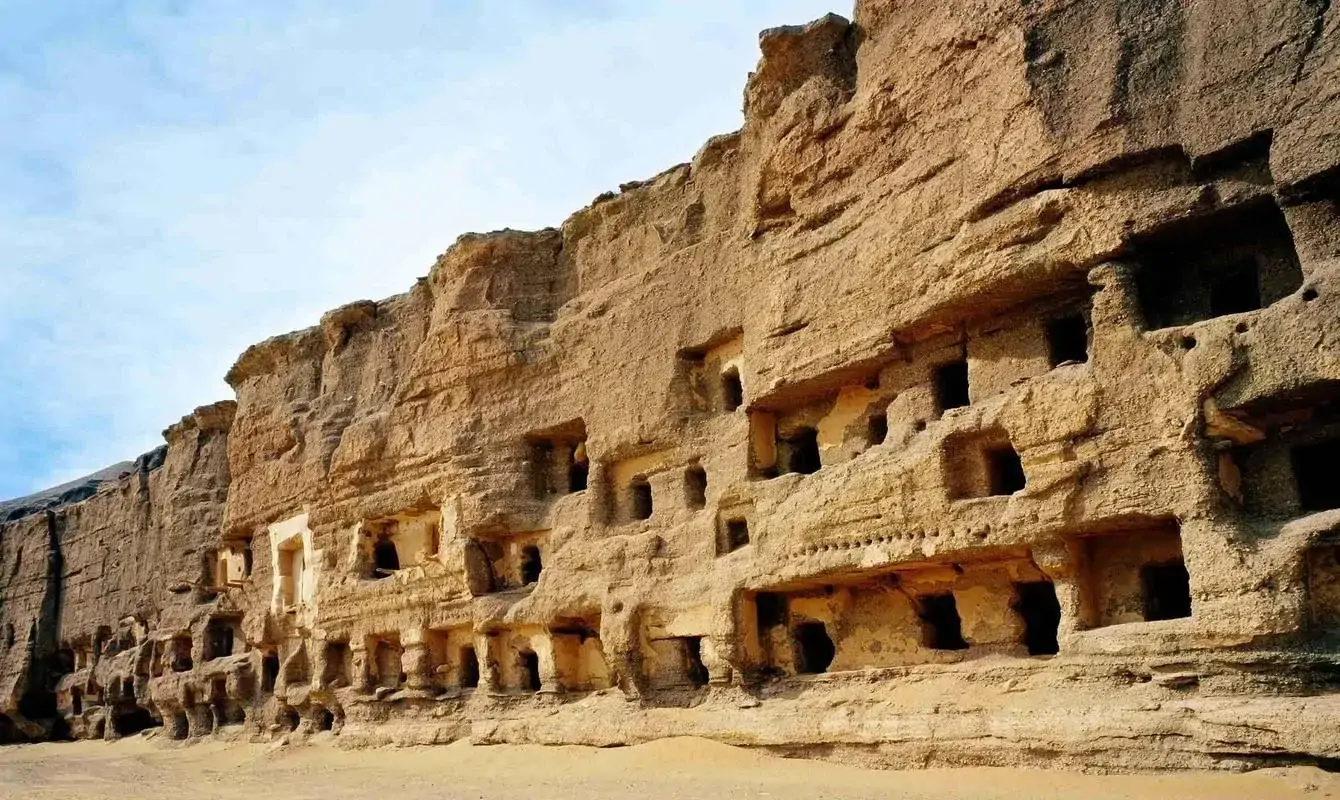
Attractions Introduction
Mogao Grottoes
Listed as a UNESCO World Heritage Site in 1987, the Mogao Grottoes were first built in 366 AD. Today, there are 735 surviving caves from different dynasties, with 45,000 square meters of murals and more than 2,400 painted sculptures. Combining architecture, painted sculptures, and murals, the site represents the pinnacle of Silk Road Buddhist art. The cave murals include Buddhist stories, historical figures, and scenes of folk life, featuring vivid colors, flowing lines, and excellent preservation. The cave types mainly include meditation caves, central pillar caves, shrine caves, altar caves, Nirvana caves, Seven Buddha caves, and giant Buddha caves. Visitors can admire Buddhist-themed paintings, Tang Dynasty flying apsaras murals, and costumes of various ethnic groups throughout history.
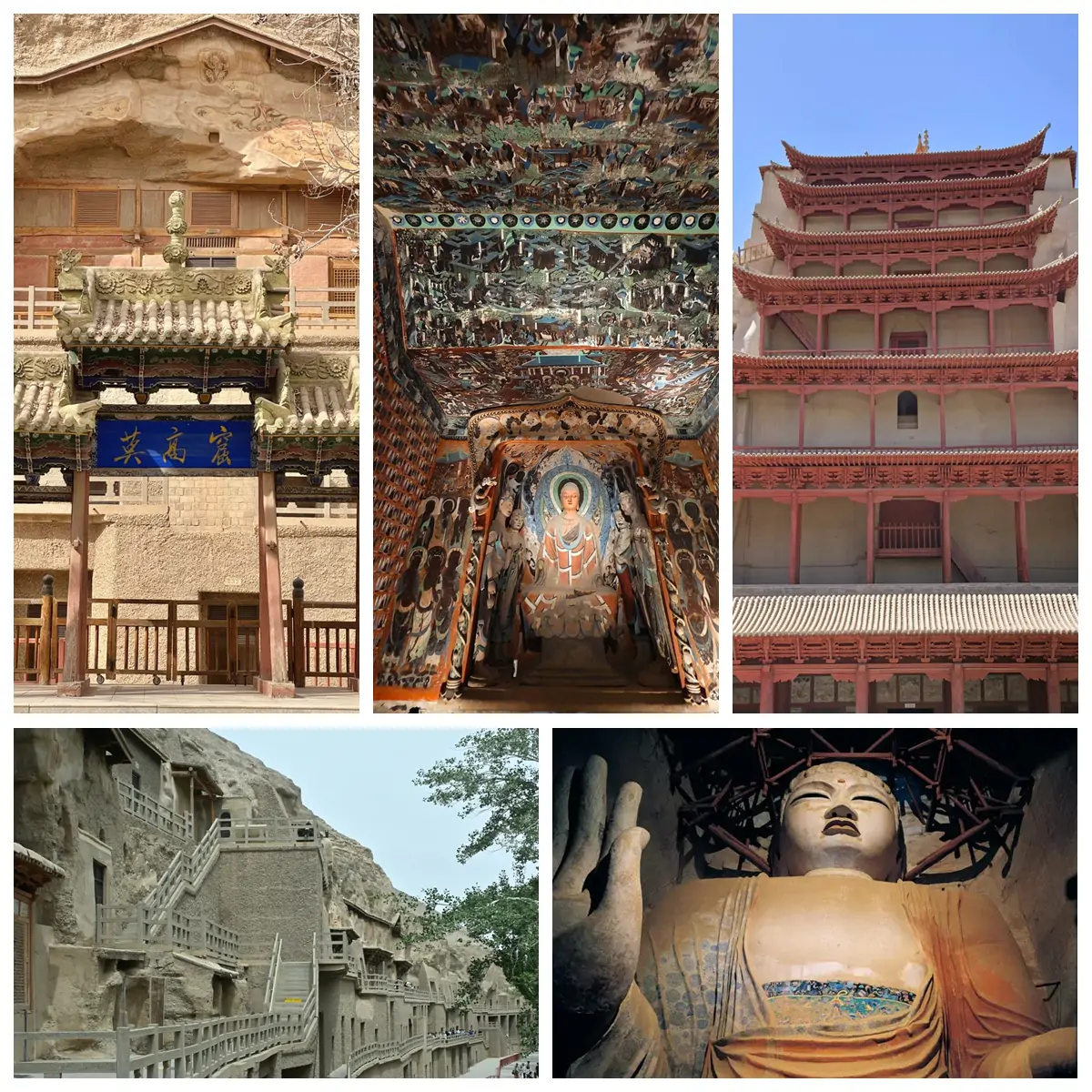
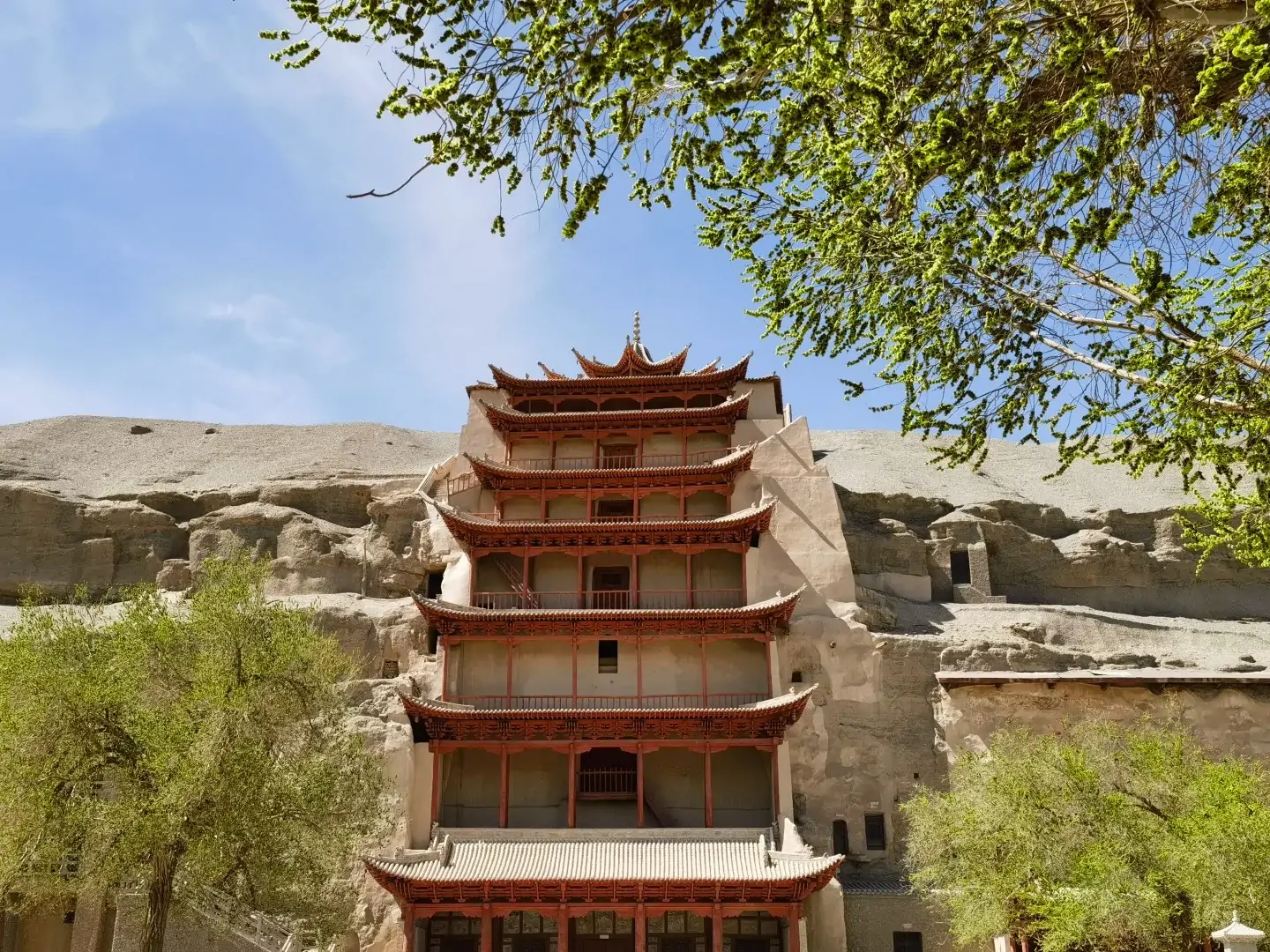
Cave 96 (Nine-Story Pavilion)
The landmark building of the Mogao Grottoes, featuring a 45-meter-high nine-story wooden structure built against the cliff. Inside stands the 35.5-meter Maitreya Buddha, the largest Buddha statue in the grottoes, creating a magnificent and imposing scene.
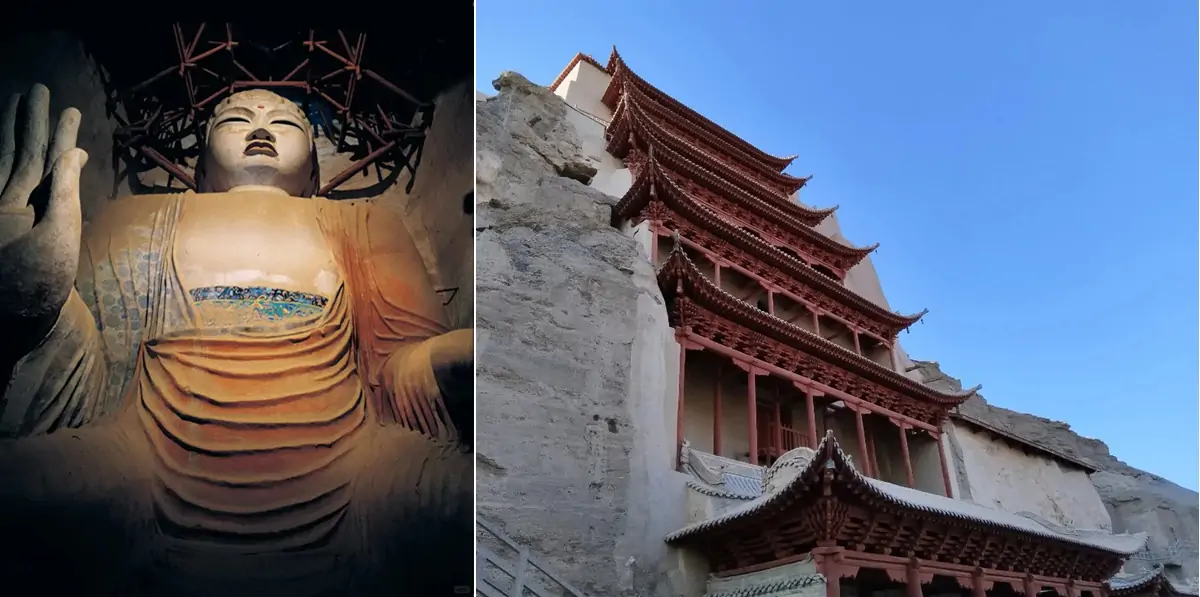
Cave 17 (Library Cave)
The cave where manuscripts dating from the 4th to the 11th centuries were discovered. The documents cover religion, history, art, and many other fields, written in Chinese, Tibetan, Sanskrit, and several other languages. It is known as the “Ancient Chinese Encyclopedia.”
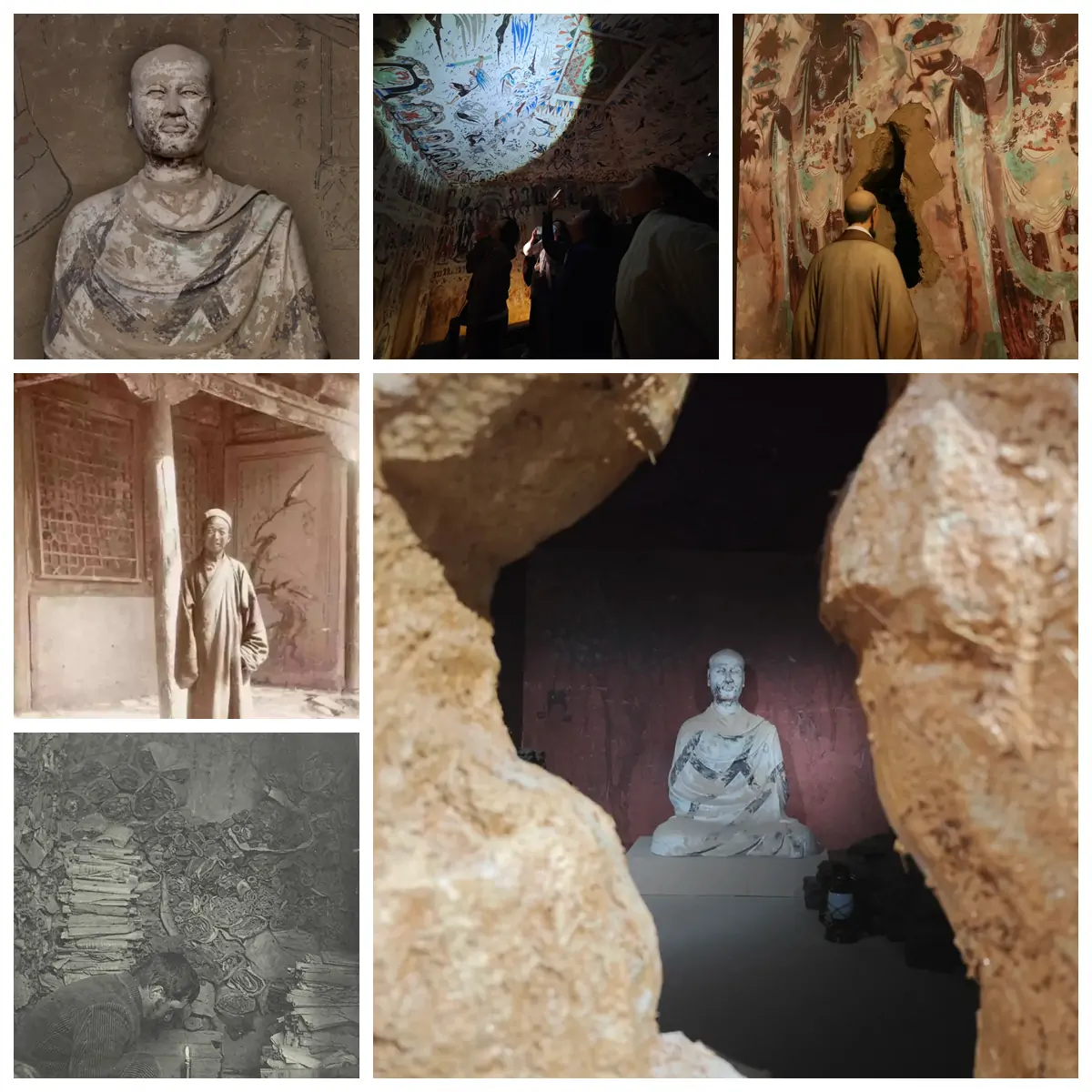
Cave 45 (Guanyin Sutra Transformation)
One of the representative caves of the High Tang period. With its unique artistic charm and profound cultural significance, it has become a brilliant jewel in the history of human civilization. The sculptures began to feature Buddha-centered group compositions, usually containing seven to nine figures, and sometimes even eleven figures.
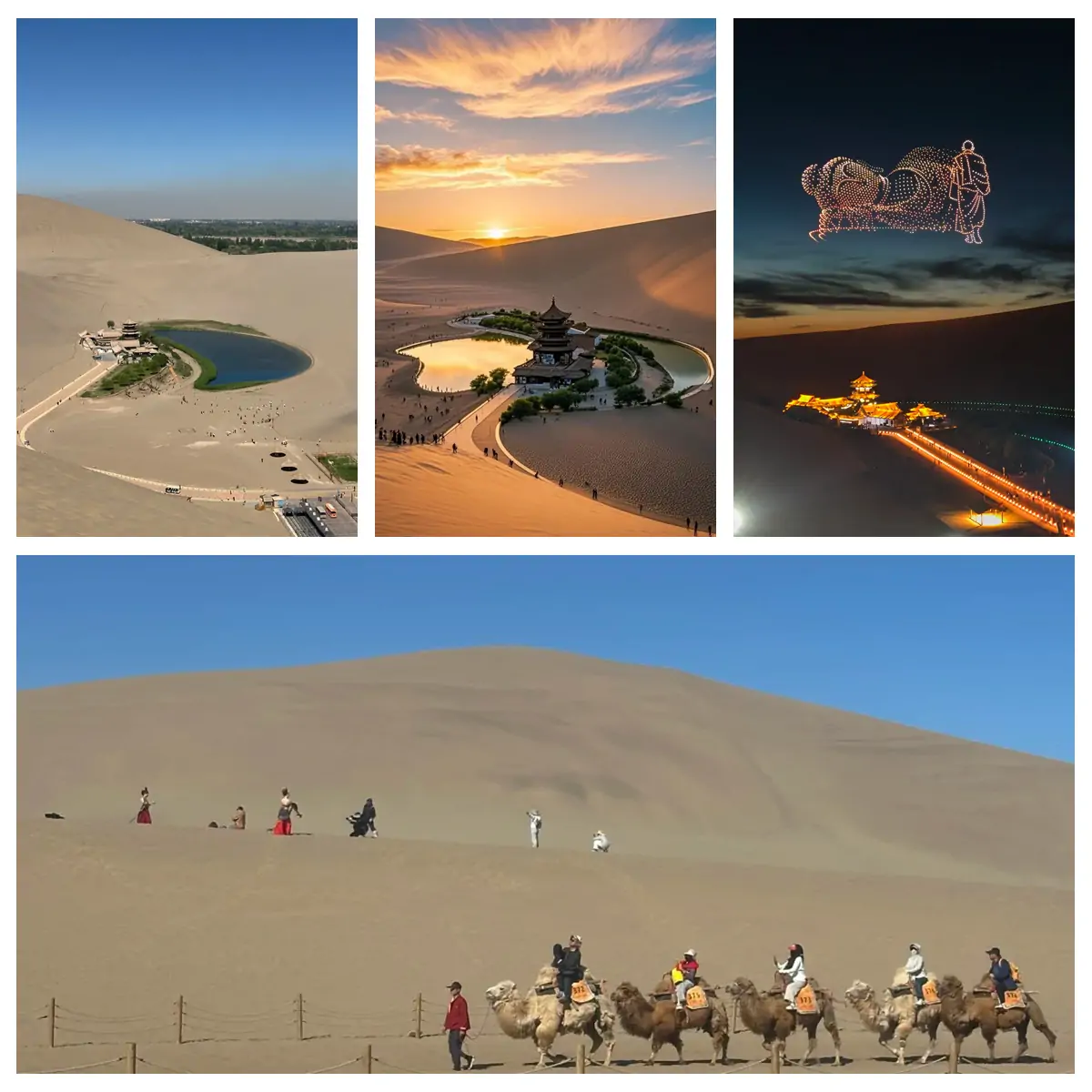
Mingsha Mountain and Crescent Spring
A unique wonder where desert and spring coexist. The sands of Mingsha Mountain produce echoing sounds, while Crescent Spring resembles a crescent moon and has never dried up for thousands of years. It is one of the “Eight Scenic Views of Dunhuang.”
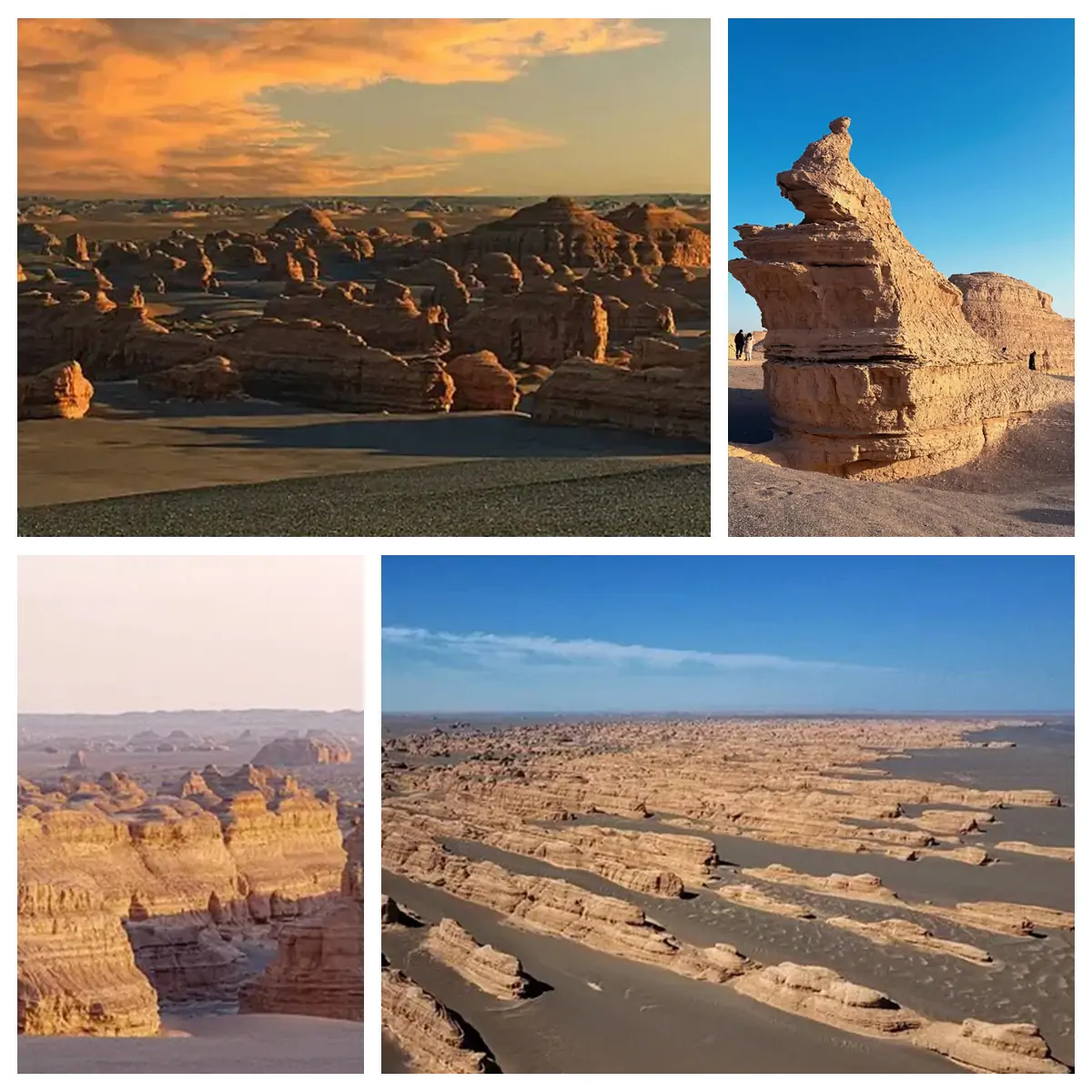
Yadan National Geological Park
A large group of Yadan landforms shaped by wind erosion. The fantastically shaped earth formations and beautiful sunset light make it known as the “Devil City.”
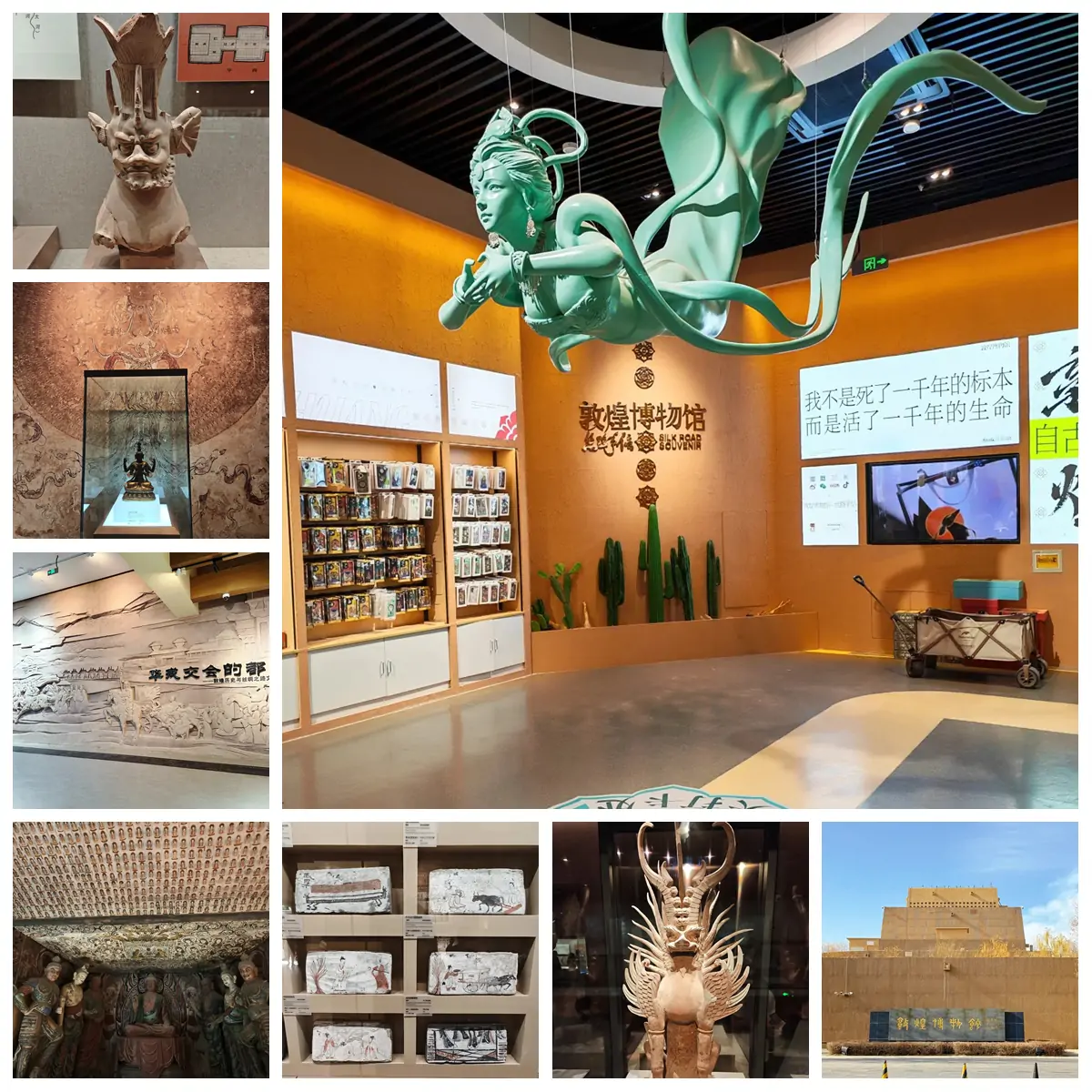
Dunhuang Museum
The museum mainly houses Han and Tang Dynasty cultural relics with extremely high historical value, serving as a historical imprint of the glory of the ancient Silk Road.
How to Visit
After arriving in downtown Dunhuang, take a shuttle bus to the Mogao Grottoes. Enter through the north entrance of the Mogao Grottoes Digital Exhibition Center, print your ticket information at the ticket office, watch the digital films in the cinema, and then take the shuttle bus to the cave area. After the visit, return by shuttle bus.
How to Get There
By Air
Dunhuang International Airport is 13 kilometers from downtown Dunhuang and about 15 kilometers from the Mogao Grottoes.
By Train
After arriving at Dunhuang Railway Station, transfer to a bus to reach the Mogao Grottoes.
Join a Tour Group
If this is your first time visiting Dunhuang, joining a tour group is a good option.
- 5 Days Dunhuang-Jiayuguan-Zhangye Silk Road Essence Tour
- 7 Days Dunhuang-Jiayuguan-Zhangye-Xining Silk Road Group Tour
- 8 Days Silk Road Trip for Authentic Cultural Experience
- 10 Days Xinjiang-Gansu-Qinghai Silk Road Group Tour
We also offer customized small-group tours. Please contact us if you have any further requests.
Email: [email protected] WhatsApp: +86 15347723823 , ++86 15347723823
Best Time to Visit
March-April: Fewer tourists and comfortable temperatures, worth visiting.
May: The weather is not too hot and is the best period for travel.
June: Tourist numbers gradually increase; early June is suitable for travel.
July to late August: Peak tourist season with hot weather, heavy crowds, and travel costs 2-3 times higher than the off-season.
September-October: Pleasant temperatures, fewer tourists, and lower travel costs.
November-February: Winter season with fewer visitors; ticket prices become half-price after December.
Ticket Prices and Inclusions
Off-Season (November-March)
140 RMB/person
Peak Season (April-October)
238 RMB/person
Includes:
- 8 physical caves at the Mogao Grottoes
- Two digital films
- Round-trip transportation
Foreign Visitor Ticket
258 RMB/person
Includes:
- 8 physical caves at the Mogao Grottoes
- Two digital films
- Round-trip transportation
- Foreign language guided tour
Discount Policy
- Students / Seniors aged 60 and above: Half-price (140 RMB)
- Seniors aged 70 and above / Disabled visitors: 20 RMB
- Children under 4 years old: Free admission
If this is your first visit to the Mogao Grottoes, you can directly purchase the standard 238 RMB ticket. If tickets are sold out on the same day, you can purchase an emergency ticket. If you want a deeper historical study experience, you can purchase a special cave ticket.
How to Book Tickets
Official Reservation
Search “Mogao Grottoes Reservation” on WeChat
Enter the official mini program
Select the date and fill in your ID card or passport information
Complete payment to finish the reservation
During the peak season (April-November), ticket quantities are limited, so it is recommended to book 30 days in advance. During the off-season, booking 7 days in advance is generally sufficient.
Join Our Tour Group
Our tour group provides ticket booking services and can assist with flight and ticket arrangements.
Travel Tips
- Be sure to reserve tickets in advance.
- Photography is not allowed inside the caves, but photos can be taken at the Nine-Story Pavilion Square and the Mogao Grottoes entrance archway.
- Strictly avoid touching, carving, or leaning against the murals.
- There is a large temperature difference between day and night, so it is recommended to bring a light jacket or long sleeves.
- The desert area has strong ultraviolet rays, so proper sun protection is necessary.
- Dunhuang is windy and sandy, so bring a windproof face mask.
Conclusion
Meet in Dunhuang and discover the scenery of a thousand years. Every mural records the civilization of the Silk Road. Explore the highlights of Dunhuang with a professional itinerary and worry-free travel experience, allowing you to fully experience the desert landscape, grotto art, and the unique beauty and shock of Dunhuang.
FAQs
Q: What is the best season to visit the Dunhuang Mogao Grottoes?
A: May to October is the peak travel season every year. The weather is warm and suitable for outdoor activities. Avoiding winter and the sandstorm season will provide a more comfortable travel experience.
Q: Is photography allowed inside the caves?
A: Photography is not allowed inside the caves. Flash lights can accelerate the oxidation and fading of the murals. The cave spaces are also narrow, and taking photos may cause congestion during visits.
Q: Are there travel routes suitable for children or elderly visitors?
A: Yes. The scenic area provides relatively easy visiting routes. Visitors can choose to experience the Digital Exhibition Center first, and the cave visit can be arranged according to physical condition and energy levels.
Q: Is there a visitor limit for the Mogao Grottoes?
A: Yes. The number of daily visitors is limited, especially during the peak season, so advance reservation is very important. It is recommended to book tickets at least 30 days in advance during the peak season.
Q: Is local transportation convenient?
A: Yes. Transportation within Dunhuang city is very convenient. There are buses and taxis available from downtown to the Mogao Grottoes and Mingsha Mountain, making travel easy and accessible.
Q: How long does it take to visit the Mogao Grottoes?
A: It is recommended to spend about 3-4 hours visiting, including the Digital Exhibition Center and the cave tour. For a deeper experience, half a day is recommended.