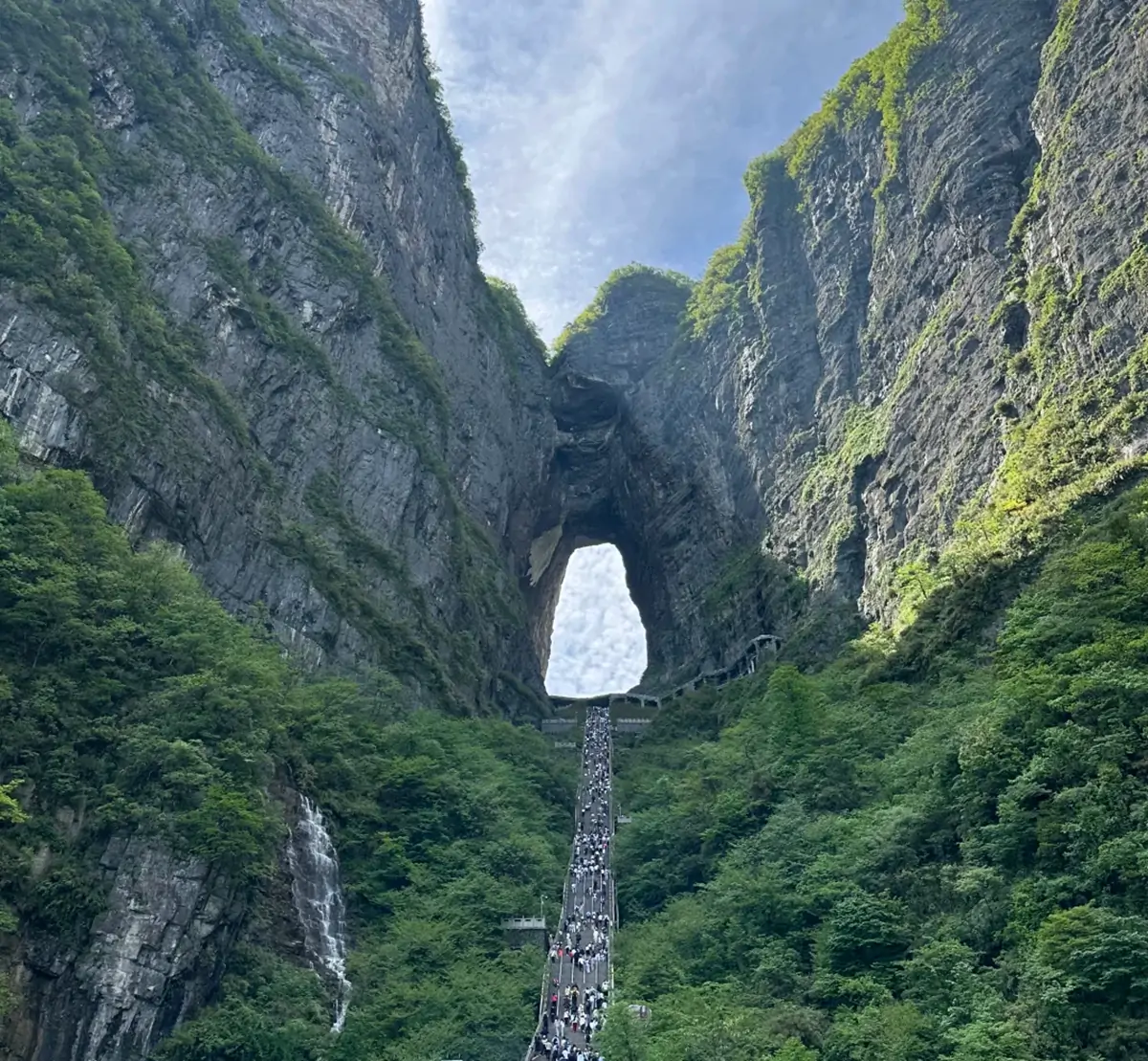
Great Wall of China Travel Guide: Sections, History & Tips
Discover the Great Wall of China. Explore top sections (Mutianyu, Badaling, Shanhaiguan), map coordinates, historic significance, travel tips, and transport.
"He who has not climbed the Great Wall is not a true hero." This famous Chinese saying makes the Great Wall a must-visit destination for travelers arriving in China. Climb the Great Wall and experience the grand spirit of China.
The Great Wall, known in Chinese as the "Wan Li Chang Cheng" (Ten-Thousand-Li Long Wall). The Great Wall spans a total length of 21,196 kilometers. Geographically, the entire network is situated between 98°–125° E longitude and 37°–41° N latitude, traversing northern China. Rather than a single continuous wall, the Great Wall is an integrated military defensive system composed of walls, trenches, watchtowers, garrison stations, and strategic passes, while also serving as a vital hub for economic trade along the imperial frontier.
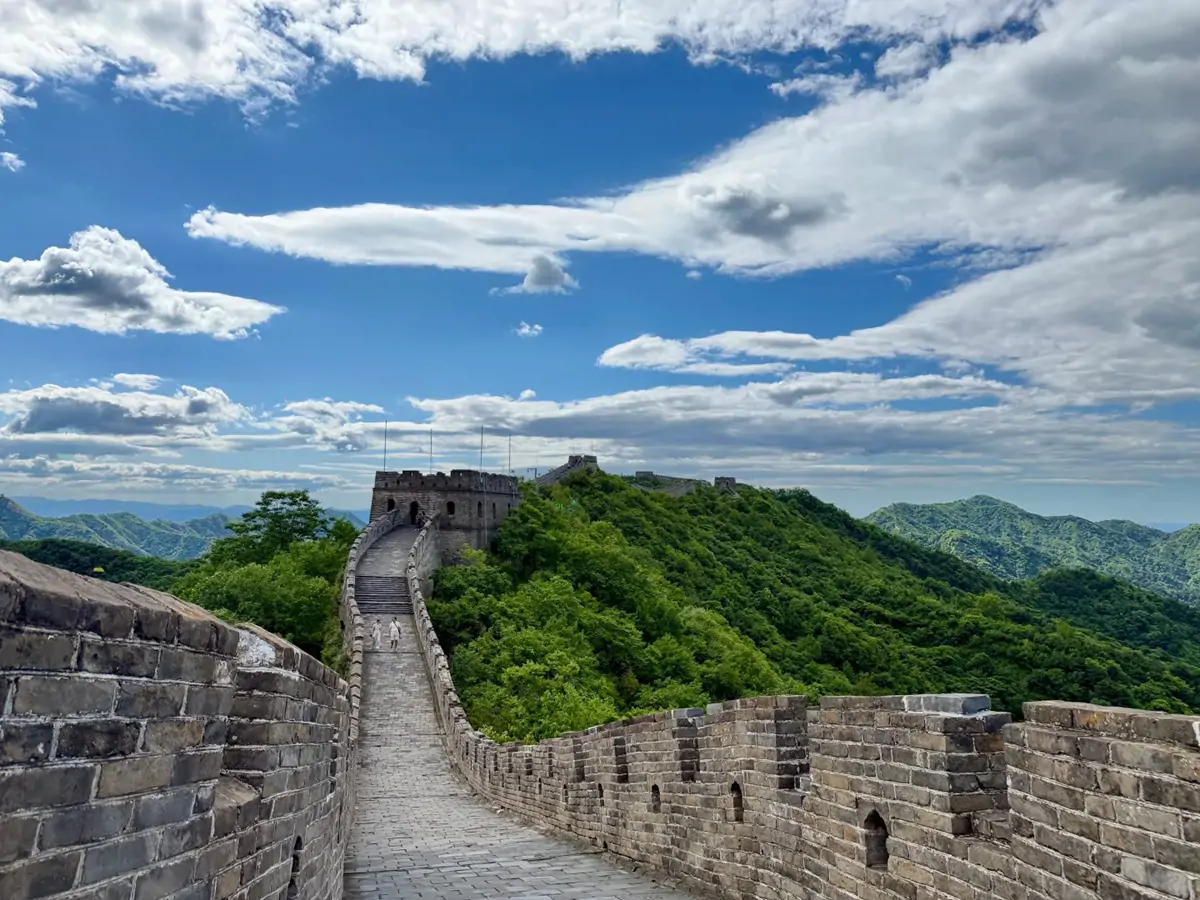
The archaeological ruins of the Great Wall span 15 provinces, municipalities, and autonomous regions, including Jilin, Liaoning, Beijing, Tianjin, Shanxi, Shaanxi, Ningxia, and Gansu. The extant cultural heritage comprises 43,721 individual heritage sites, including wall bodies, trenches, boundary ditches, independent structures, fortresses, and related military facilities. The Great Wall stands as the largest architectural structure built in human civilization. In December 1987, the Great Wall was officially inscribed on the UNESCO World Heritage List.
History of the Great Wall of China
The northern frontier of ancient China faced persistent incursions from nomadic tribes. Historical records indicate that the construction of long walls to repel northern nomadic raids dates back to the Spring and Autumn Period (770–476 BC) and the Warring States Period (475–221 BC). Following China's unification under Qin Shi Huang (the First Emperor of Qin), almost every dynasty that ruled the Central Plains undertook the construction and maintenance of the Great Wall. This includes not only the Han ethnic majority but also various ethnic minority dynasties during their governance of central China.
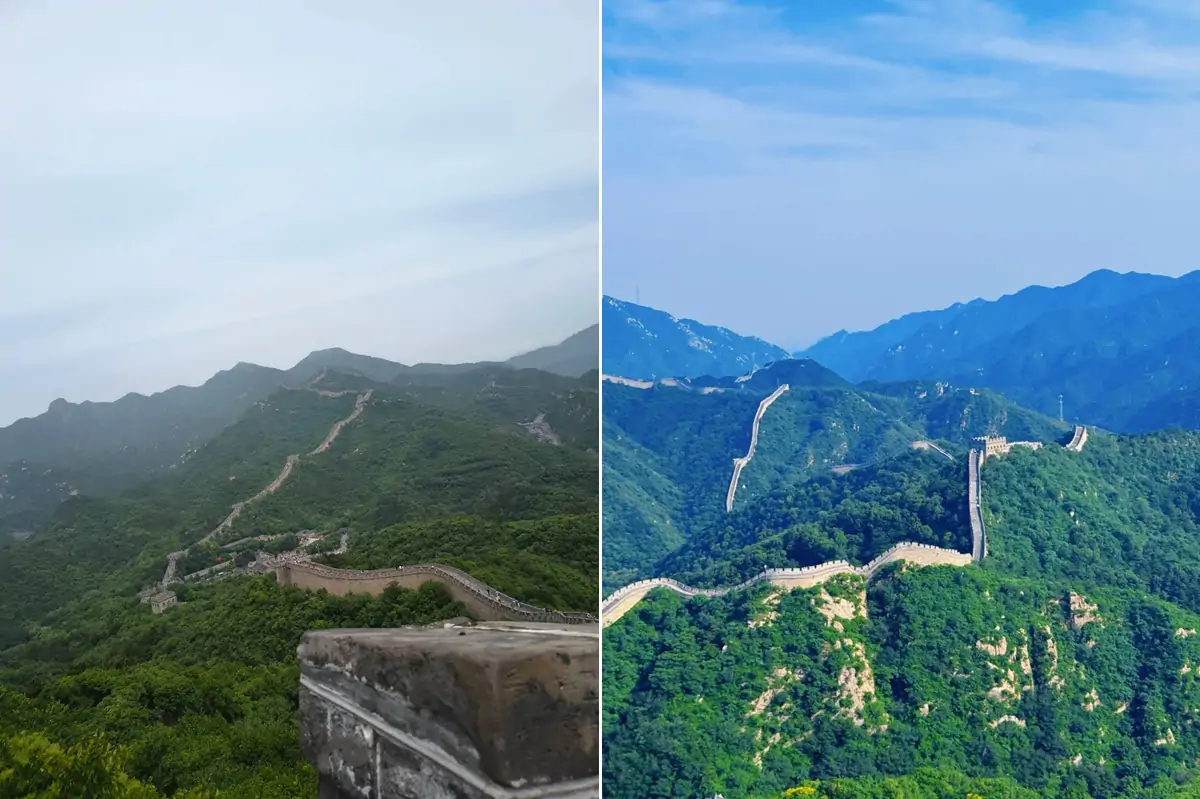
The origin of these defensive walls traces back to the Western Zhou Dynasty (1046–771 BC), when the Zhou kingdom built a continuous alignment of fortresses known as "Lie Cheng" (Line of Fortresses) to defend against the Xianyun nomadic tribe. During the Spring and Autumn and Warring States periods, rival states constructed walls along their respective borders for mutual defense and geopolitical dominance, the earliest recorded construction being the "Chu Fang Cheng" (Wall of the Chu State), built in the 7th century BC. Subsequently, states such as Qi, Han, Wei, Zhao, Yan, Qin, and Zhongshan built their own defensive walls, historically classified into Northern Walls and Southern Walls based on their defensive targets.
The Northern Walls: Built by the states of Qin, Zhao, and Yan to defend against powerful northern nomadic tribes skilled in equestrian archery and rapid guerrilla tactics. Before the mid-Warring States period, the military forces of these three Chinese states relied heavily on infantry and chariots, which moved slowly and could not effectively counter nomadic ambushes. This failure threatened civilian lives and properties and impeded the unification of China. To reverse this disadvantage, these states reformed their military systems and constructed the Northern Great Wall.
The Southern Walls: Represented by the states of Chu, Wei, Qi, and Han, these walls were constructed primarily to defend against invasions from neighboring vassal states within China.
Where to Visit?
Top Great Wall Sections
Beijing is the primary gateway city for experiencing the Great Wall, hosting several world-renowned sections in its suburban districts, including Badaling, Mutianyu, Jinshanling, Juyongguan, Gubeikou, and Jiankou. Among these, Badaling is the most famous and highly visited by large tour groups, often experiencing high tourist density. Nearby Juyongguan houses one of the three great strategic passes of the Great Wall, also attracting significant visitor volumes. Beyond Beijing, prominent sections in other provinces include Shanhaiguan, Jiayuguan, and the Jiaoshan Great Wall. Below is a detailed analysis of these primary sections:
Badaling
Located in Yanqing District, Beijing, Badaling is the most representative section of the Ming Dynasty Great Wall and serves as the forward outpost for Juyongguan Pass. Situated at an altitude of 1,015 meters, it historically functioned as a vital military pass and a crucial protective barrier for Beijing. In 1961, the State Council of China designated the Badaling fortress and walls as a Major Historical and Cultural Site Protected at the National Level. It was inscribed as a UNESCO World Heritage site in 1987 , and in August 1991, the Palace Museum in Beijing received the official human cultural heritage certificate from UNESCO on behalf of the Great Wall.
Mutianyu
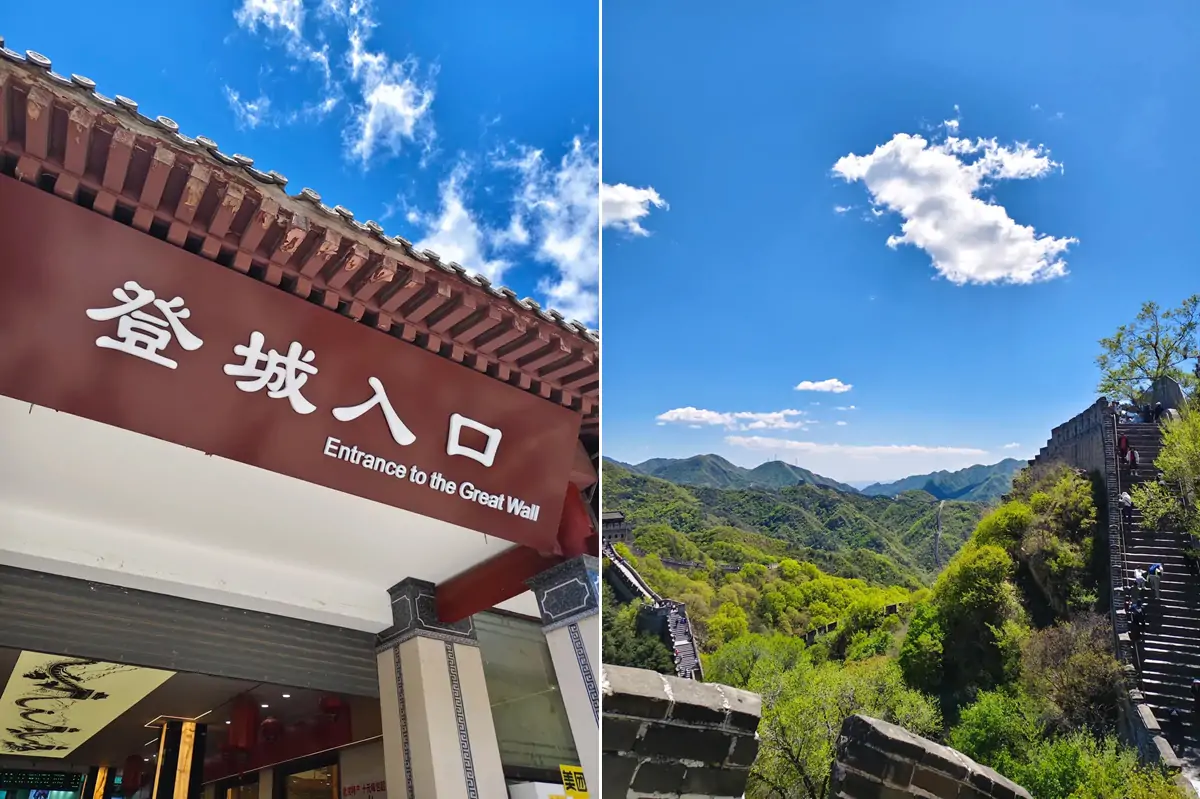
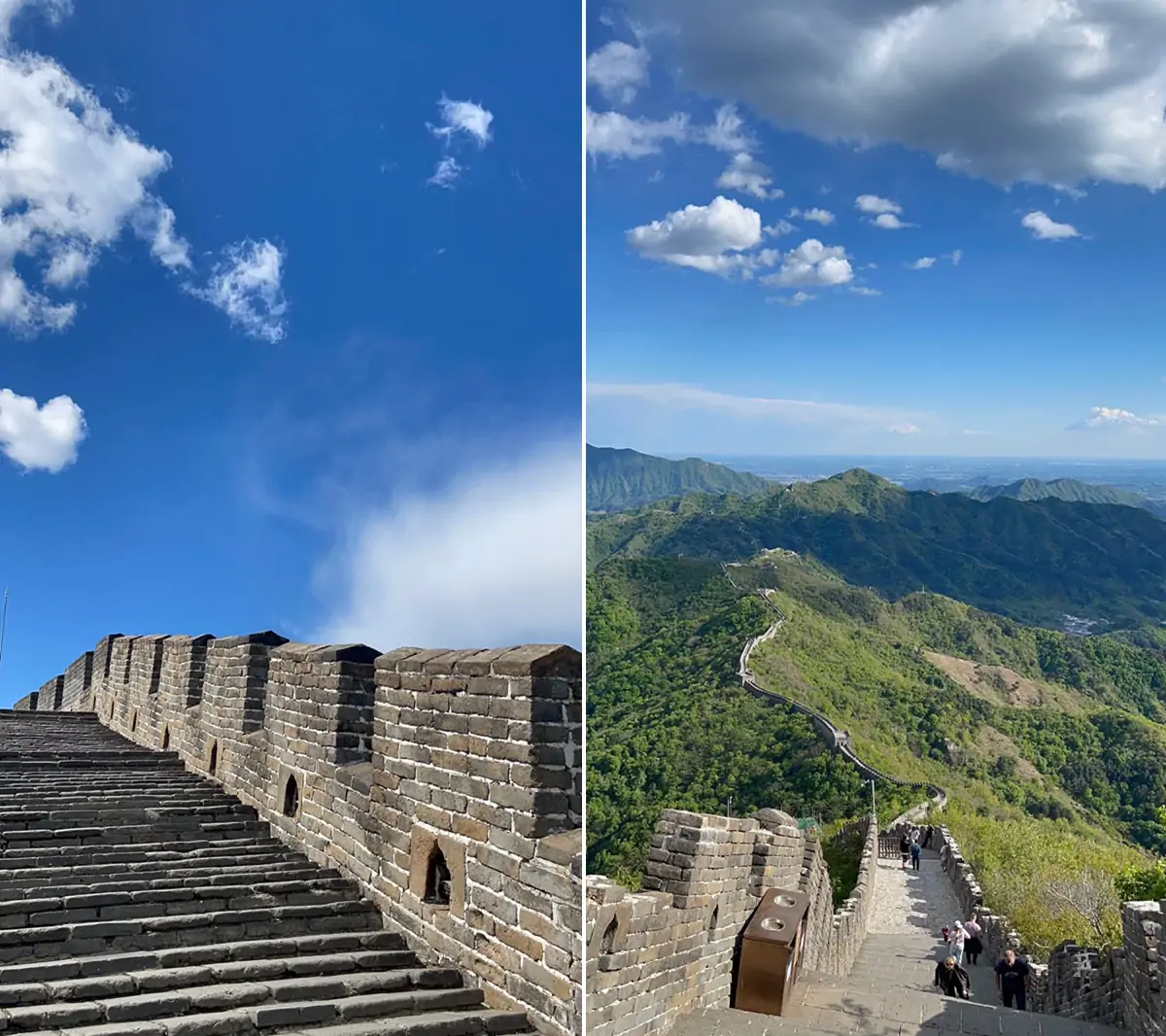
Situated within Huairou District, Beijing, Mutianyu is recognized as one of the "New Sixteen Scenic Spots of Beijing." It connects with Juyongguan Pass to the west and Gubeikou to the east. It was named a "Beijing Tourism World Record" site in 1992 and classified as a National 4A Tourist Attraction in 2002. Due to its strategic geographical position, Mutianyu was a historical military stronghold guarding Beijing, traditionally referred to as the "Precipitous Ridge and Majestic Pass."
Juyongguan
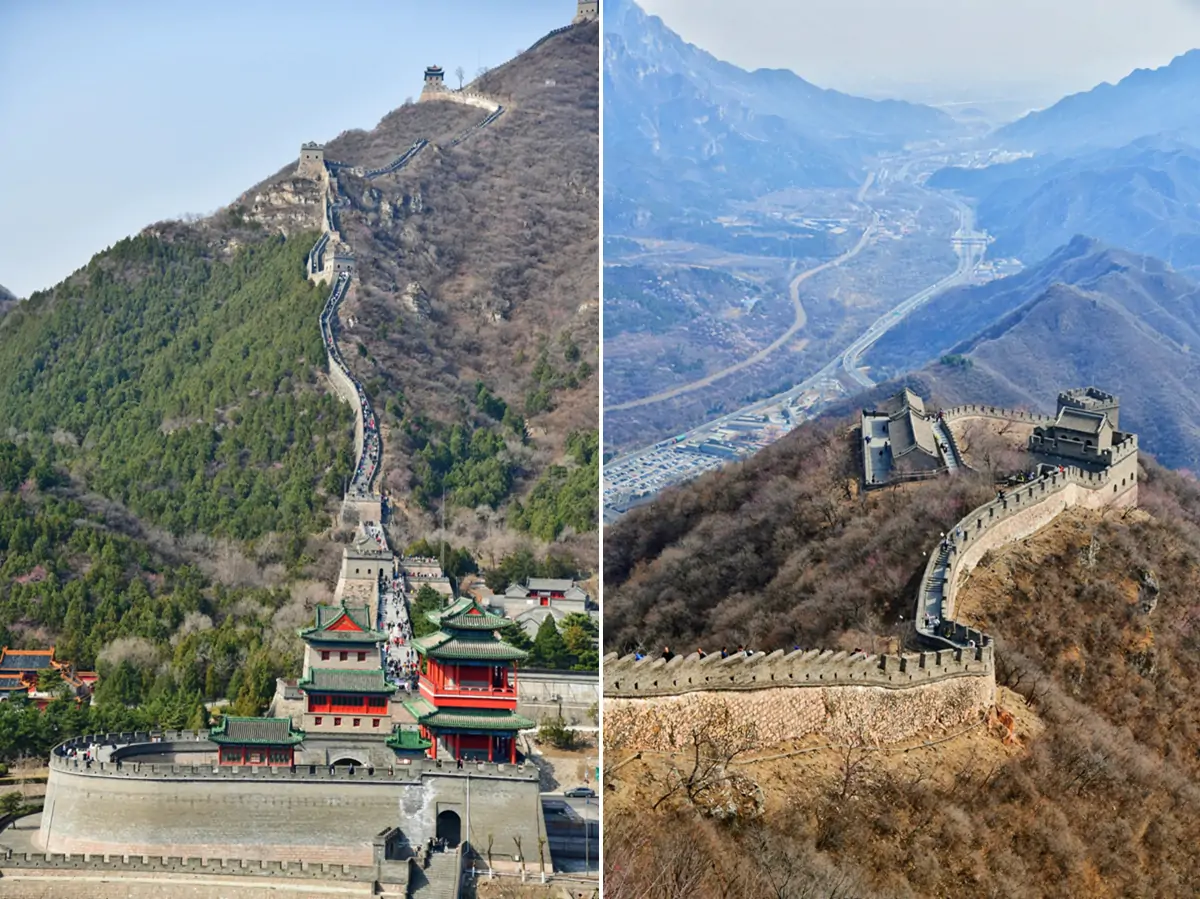
Positioned in the Guangou Ravine 48 kilometers northwest of downtown Beijing, Juyongguan is one of the oldest and most renowned passes along the Great Wall. The ravine containing the fortress rests within the Jundu Mountain terrain (a subsidiary ridge of the Taihang Mountains) and is famous for its steep topography. Generations of writers and scholars left commemorative poetry here; the Qianlong Emperor of the Qing Dynasty personally inscribed the four characters "Ju Yong Die Cui" (Juyong Layers of Greenery), marking it as the top scenic view among the famous "Eight Views of Yanshan."
Shanhaiguan
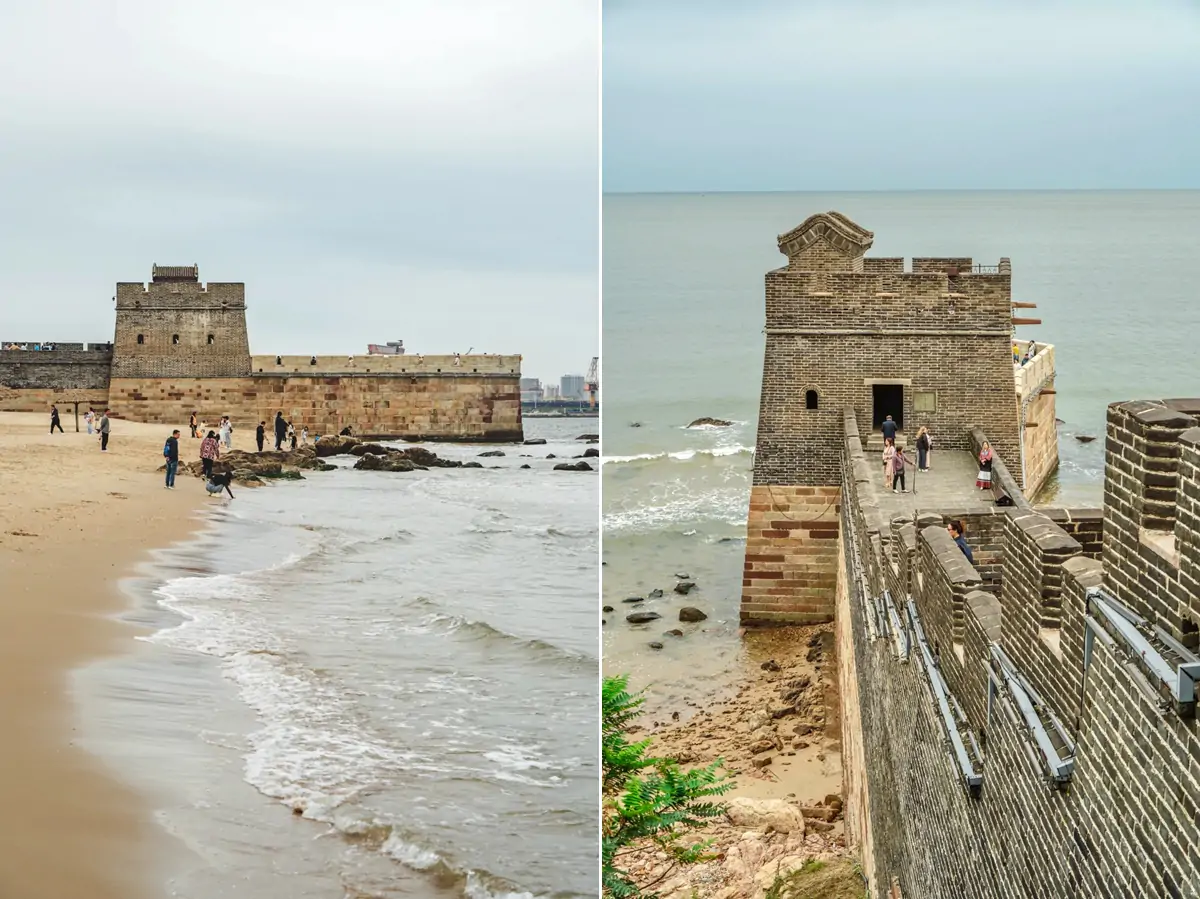
Known as the "First Pass Under Heaven," Shanhaiguan is located 15 kilometers northeast of Qinhuangdao City, Hebei Province, and marks the eastern terminus where the Great Wall meets the sea. Spanning 26 kilometers, the complex includes the Laolongtou (Old Dragon's Head) Great Wall, South Wing Great Wall, Fortress Great Wall, North Wing Great Wall, Jiaoshan Great Wall, Sandaoguan Great Wall, and Jiumenkou Great Wall. The Laolongtou section constitutes the specific segment extending into the sea. Shanhaiguan was developed under the Ming Dynasty's "Weisuo Military System," and the Ming "Tuntian System" (military-agricultural colonies) and subsequent reform policies played a critical role in consolidating and developing this defensive stronghold.
Jiaoshan Great Wall
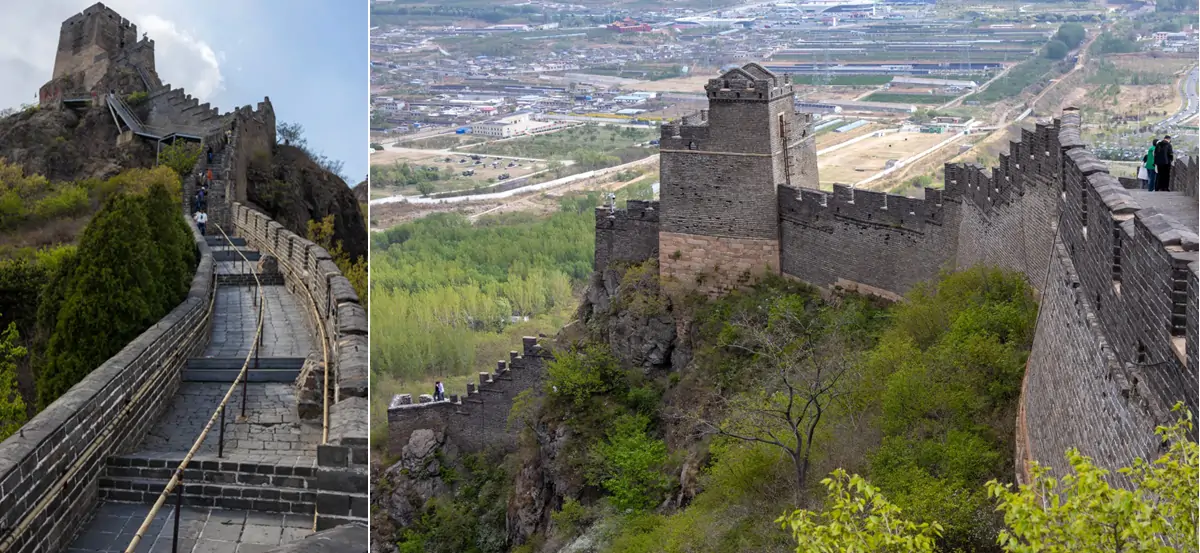
Located approximately 3 kilometers north of Shanhaiguan in Qinhuangdao City, Hebei Province, Jiaoshan forms part of the Yanshan mountain remnants and stands as the highest peak protecting the northern flank of the fortress, reaching an altitude of 519 meters. Its summit features a broad, flat plateau capable of seating several hundred people, surrounded by craggy, towering rocks resembling a dragon's head with horns, which gave the mountain its name. Jiaoshan is the very first mountain peak that the Great Wall crosses as it climbs northward from Laolongtou, earning it the title "The First Mountain of the Great Wall."
The Global and Historical Significance of the Great Wall
Sino-Western Cultural Exchange: The construction of the Great Wall facilitated continuous exchange, mutual learning, and integration between Eastern and Western civilizations. The ancient Silk Road pioneered international connectivity, and the Great Wall served as the primary security infrastructure protecting this extensive international transport corridor.
Military Architecture: The Great Wall represents one of the most comprehensive military defensive engineering networks in ancient world history. It is not an isolated, single-line defensive wall, but an integrated system linking passes, military fortresses, and garrison cities from independent points into strategic lines and surfaces, forming an airtight defensive matrix.
Cultural Heritage: Over the 2,000 years since its inception, the Great Wall has served as a geographic focus for continuous cultural exchange between northern nomadic and southern agricultural societies. Its architectural scale and deep cultural connotations have consistently attracted Chinese scholars and international figures across generations. Numerous poets used the Great Wall as a central theme to create significant works of poetry, fine arts, and music, with the "Frontier Poetry" (Bian Sai Shi) of the Tang Dynasty being the most historical example.
Best Time to Visit the Great Wall of China
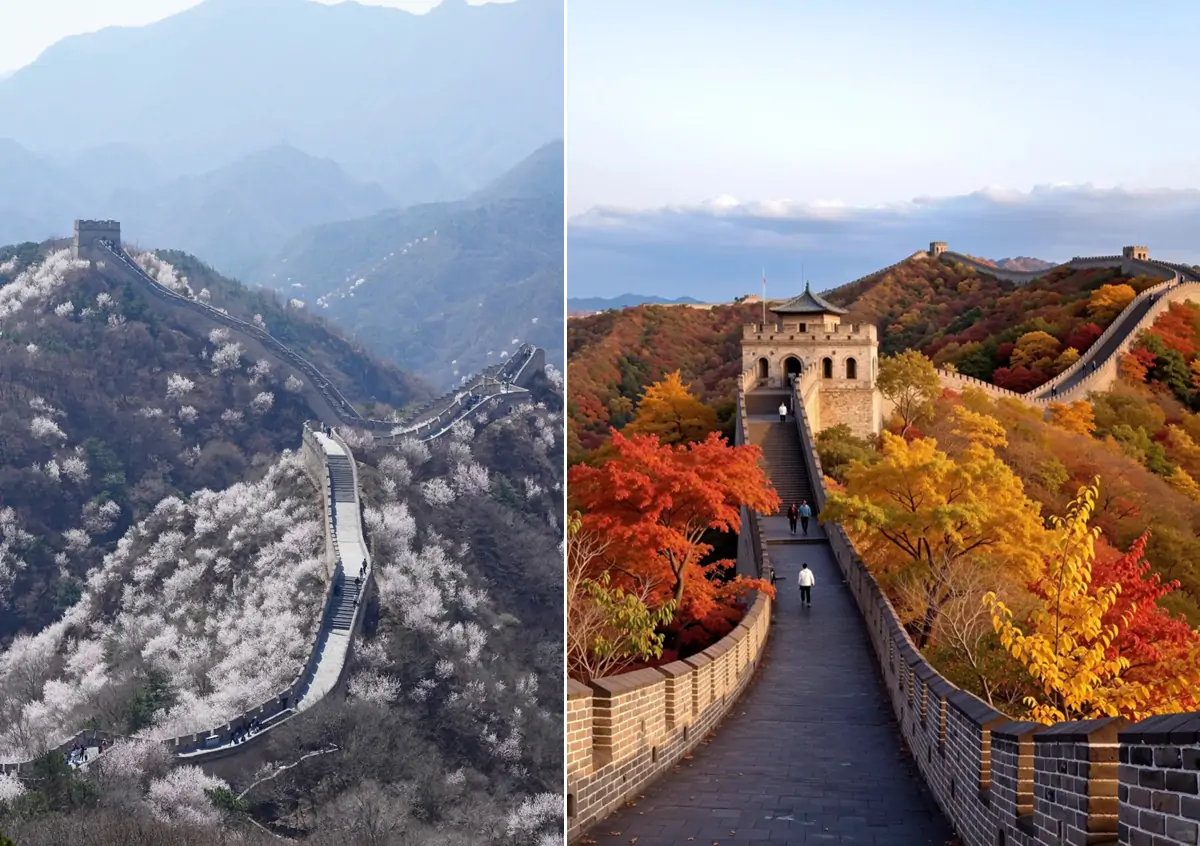
Spring (March – May): Vegetation and wild mountain flowers bloom across the ridges. The weather is temperate and air quality is clear, providing optimal conditions for trekking.
Autumn (September – November): Characterized by clear autumn skies and high visibility. The maple forests on both sides of the wall turn vibrant red, creating a dramatic, layered landscape highly suited for travel photography.
Essential Travel Tips
Gear Requirements: For trekking the Great Wall, sturdy hiking boots, layered clothing, sunscreen, water, and snacks are essential items. It is advisable to pack a compact first-aid kit to prevent heatstroke or minor injuries.
Wind and Temperature: Wind speeds on the wall ridges are high, and temperatures are consistently lower than in downtown urban areas—especially during spring and autumn. Ensure you carry a windproof jacket.
Timing and Crowds: We recommend departing early in the morning. Weekends and national holidays see high tourist traffic; it is highly recommended to avoid public holidays and schedule visits on weekdays.
Cultural Heritage Protection: Do not carve characters or graffiti into the Great Wall masonry, do not litter, and do not damage historical relics. Join efforts in protecting this World Cultural Heritage site.
Ticketing and Identification: Several Great Wall scenic areas enforce real-name ticketing policies. Ensure you carry your physical passport or valid identification document for entry verification.
How to Get to the Great Wall (Badaling Section)
High-Speed Railway (HSR)
Departure Stations: Beijing Bei (Beijing North) Station / Qinghe Station.
Travel Time: Approximately 30 minutes to Badaling Great Wall Station.
Public Bus
Bus Route 877: Departs from Beijiao Bus Station (accessible via Beijing Subway Line 8 and Line 10) and travels direct to Badaling Great Wall.
Travel Time: Approximately 2 hours.
Self-Driving / Private Car Charter
Depart from downtown Beijing and navigate via the Beijing-Tibet Expressway (G6) to the Badaling Exit.
Distance: Around 70 kilometers.
Travel Time: Approximately 1.5 hours.
You can also join one of our tours to visit this place:
Dining and Food on the Great Wall
There are virtually no sit-down restaurants located directly on top of the actual wall structures; only small snack kiosks are available. Full sit-down meals are located at the base of the mountains or within surrounding villages. Below is a guide based on our professional tour operations:
On the Wall / Entrance Snacks: Great Wall Cultural Creative Ice Cream (Milk or Strawberry flavors) costs approximately 15 RMB. Other items include grilled sausages, roasted sweet potatoes, roasted corn, and steamed buns. Casual dining options include Beef Noodles, Zhajiangmian (Fried Sauce Noodles), and fast food sets.
Mountain Base / Village Restaurants: Authentic Beijing Roast Duck (a culinary must-try), Chinese Iron Pot Stew (Tie Guo Dun), and traditional courtyard dining at Tianja Dayuan.
Accommodation Choices
To avoid daytime crowds and experience Great Wall sunrises or sunsets, you can opt to stay overnight in local boutique guesthouses (homestays) or resort hotels located near the walls to experience a quiet natural landscape. (Recommended options include guesthouses near the Mutianyu section or resort hotels near the Badaling section) .
Conclusion
Whether you are visiting China for the first time or returning to deepen your exploration of Eastern culture, the Great Wall remains an unmissable world wonder. As one of China's most iconic historical landmarks, it carries thousands of years of civilization and delivers an emotionally profound travel experience to every visitor. By choosing our tour groups, you will benefit from professional guided commentary, comfortable and efficient transportation logistics, and deep cultural immersion services. Book your Beijing Great Wall tour today to experience the perfect integration of Chinese history and natural scenery, creating an unforgettable life memory.
Email: [email protected] WhatsApp:+86 15347723823 , ++86 15347723823
FAQ
Q: Where is the Great Wall of China located?
A: The Great Wall is situated across northern China, spanning over 20,000 kilometers. The sections located around Beijing—specifically Mutianyu, Badaling, and Jinshanling—are the most accessible and popular among international travelers, making them ideal for single-day excursions.
Q: Is the Great Wall suitable for elderly travelers and young children?
A: While certain wild or steep sections feature high gradients, developed areas like Mutianyu and Badaling are equipped with fully functional cable cars and flatter paved pathways, making them highly suitable for family travelers, senior citizens, and children. We recommend selecting your specific route based on physical fitness levels.
Q: How do I book a Beijing Great Wall tour?
A: Travelers can book Beijing Great Wall day tours, private customizable packages, or private car charter services in advance through official travel agency websites. Advanced booking secures entry slots, competitive pricing, and smoother logistical operations. Our agency stands as an excellent service provider for your journey.
Q: How long does a Great Wall day tour take?
A: Most Beijing Great Wall day tours require approximately 6 to 10 hours to complete. This timeframe includes round-trip transit, professional guide commentary, and independent exploration time. Choosing a private tour or car charter offers greater flexibility in the itinerary.
Q: What should I prepare before visiting the Great Wall?
A: Visitors should wear comfortable athletic or hiking shoes and bring adequate drinking water, sun protection items, and physical identification documents. Bring warm insulation layers if traveling during winter, and apply comprehensive UV protection during summer.