Tunxi Ancient Street Guide | Old Street in Huangshan, China
Planning Mt Huangshan Tours? Visit Tunxi Ancient Street to explore Huizhou architecture, local food, famous tea, traditional shops and historic culture before heading to Huangshan Mountain.
Tunxi Ancient Street is one of the famous tourist attractions in Huangshan City and an important stop on many Mt Huangshan Tours. Located at the foot of Huangshan Mountain and at the bend of the Xin'an River, it sits in the beautiful mountain city of Tunxi.
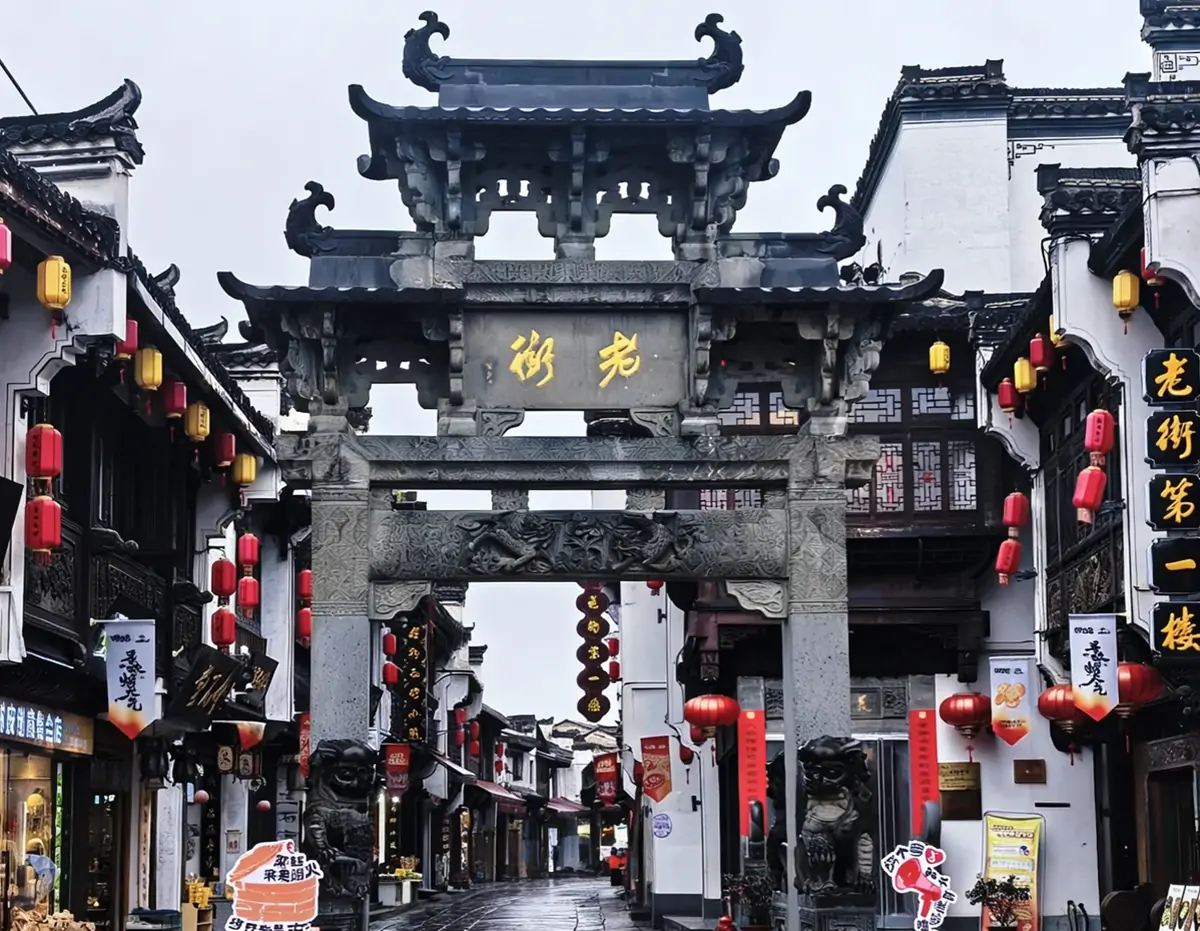
The ancient street is 1,273 meters long (approximately 1,392 yards), with 895 meters (about 979 yards) designated as a pedestrian commercial street paved with reddish-brown stone slabs. With a history of over a century, Tunxi Ancient Street is one of China's best-preserved ancient streets featuring Song, Ming, and Qing architectural styles. It consists of one main street, three secondary streets, and eighteen lanes, housing more than 300 Huizhou-style buildings.
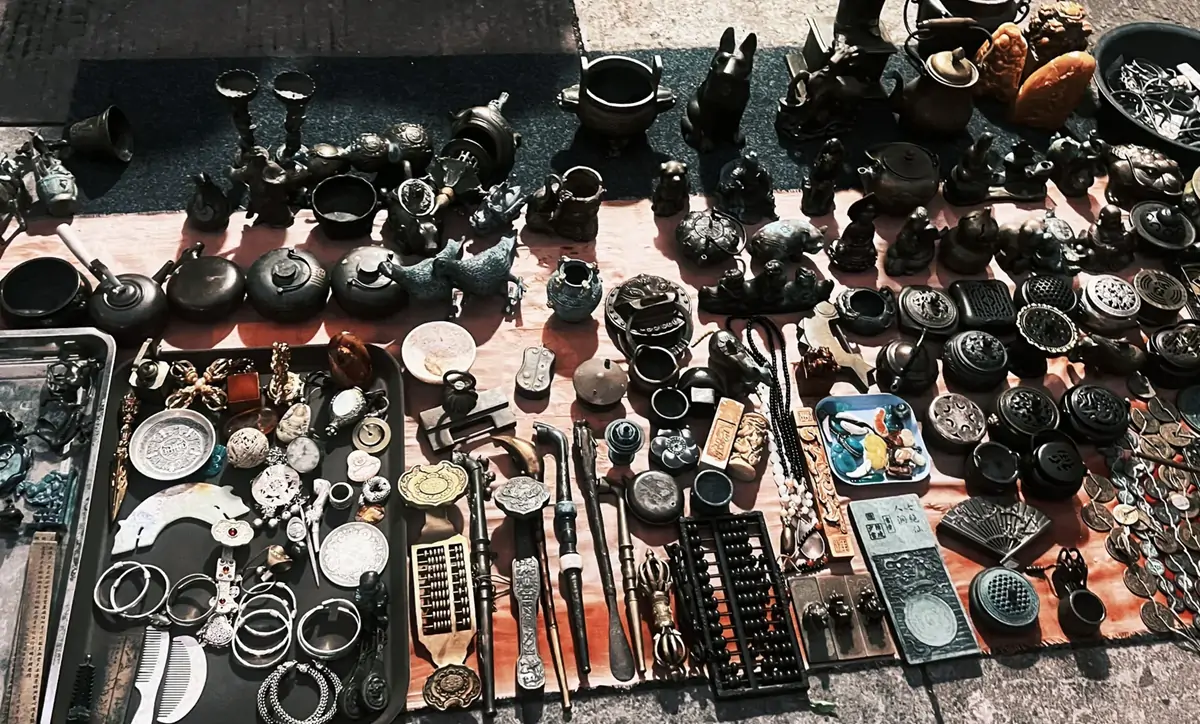
Tunxi Old Street is filled with antique shops, jade stores, calligraphy and painting studios, stationery shops, Huizhou-style restaurants, and food stores, exuding an old-world charm. There is also the Dai Zhen Memorial Hall. Tourists can stroll along the ancient street to experience Huizhou culture, immerse themselves in the fragrance of tea and ink, and savor local specialty snacks.
In 2009, it was elected as one of the "China Historic and Cultural Famous Streets" along with Beijing's Guozijian Street and Suzhou's Pingjiang Road, making it a recommended stop in every Huangshan travel guide.
The History of Tunxi Ancient Street
The history of Tunxi Ancient Street can be traced back to the Song Dynasty (960–1279 AD), with a history spanning several hundred years. When Emperor Huizong of the Song Dynasty (1082–1135 AD) moved the capital to Lin'an (modern-day Hangzhou), he recruited many architects and craftsmen to participate in the construction of the new capital. After returning to their hometowns, they built houses along the street imitating the architectural style of the new capital, thus forming Tunxi Ancient Street.
At the beginning of the Ming Dynasty, an Anhui merchant invested in building 47 shops to attract traders and promote exchanges between Tunxi and the outside world. During the Qing Dynasty (1644–1911), Tunxi Ancient Street gradually developed into a distribution center for goods within and outside Anhui. By the late Qing Dynasty, the area was lined with numerous shops, including traditional private banks, pawnshops, silverware stores, pharmacies, general stores, restaurants, as well as shops selling tea, silk, porcelain, salt, sugar, and other commodities.
During the Republic of China period (1912–1949), Tunxi Ancient Street was renowned as the "Little Shanghai" due to its prosperity. Today, it remains one of the most representative historical streets featured in many Mt Huangshan Tours.
An American professor once marveled at discovering an "Eastern Rome." Today, this street has also become a beloved natural filming studio for movie and television production companies.
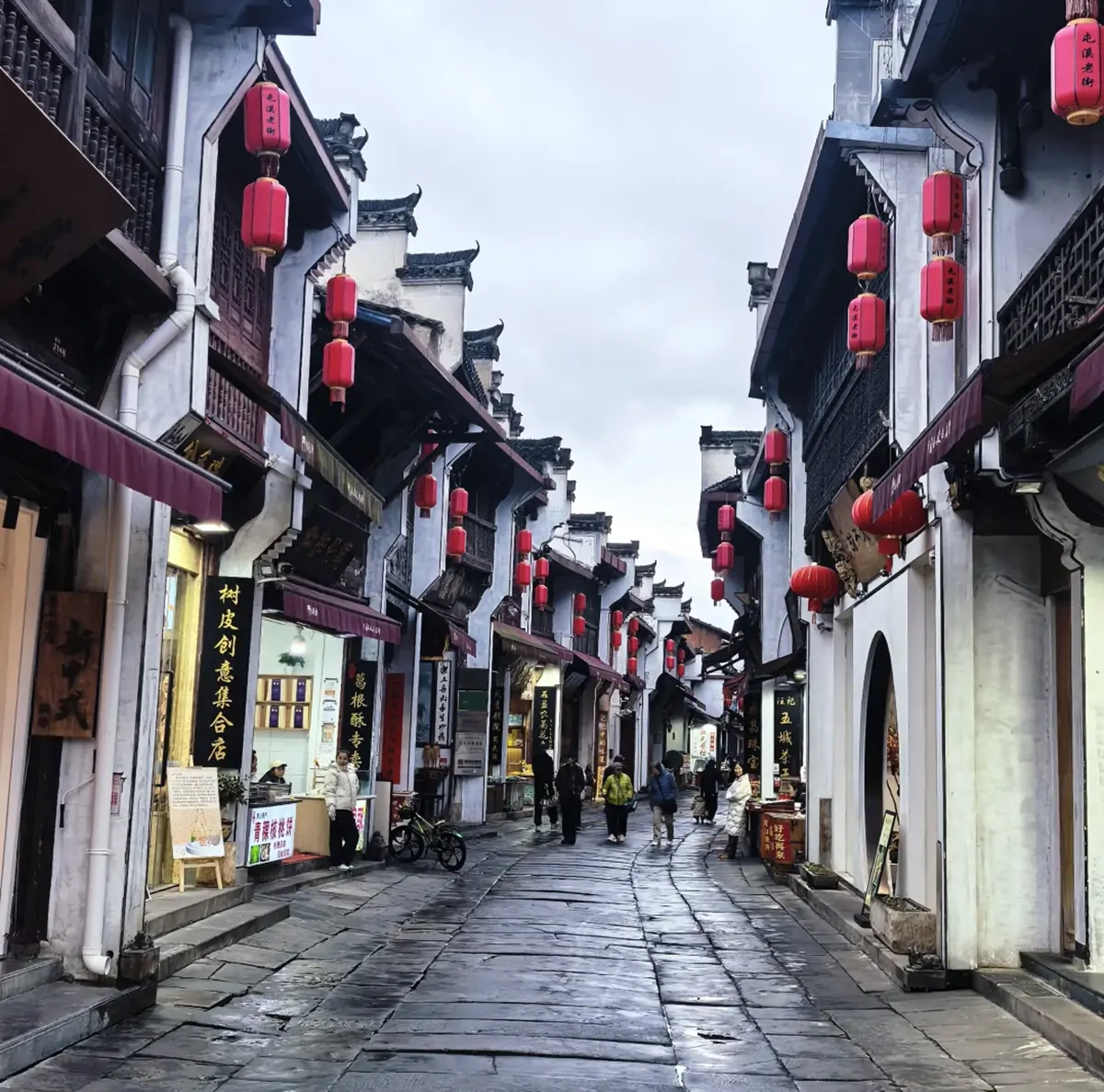
What's Worth Watching and Playing?
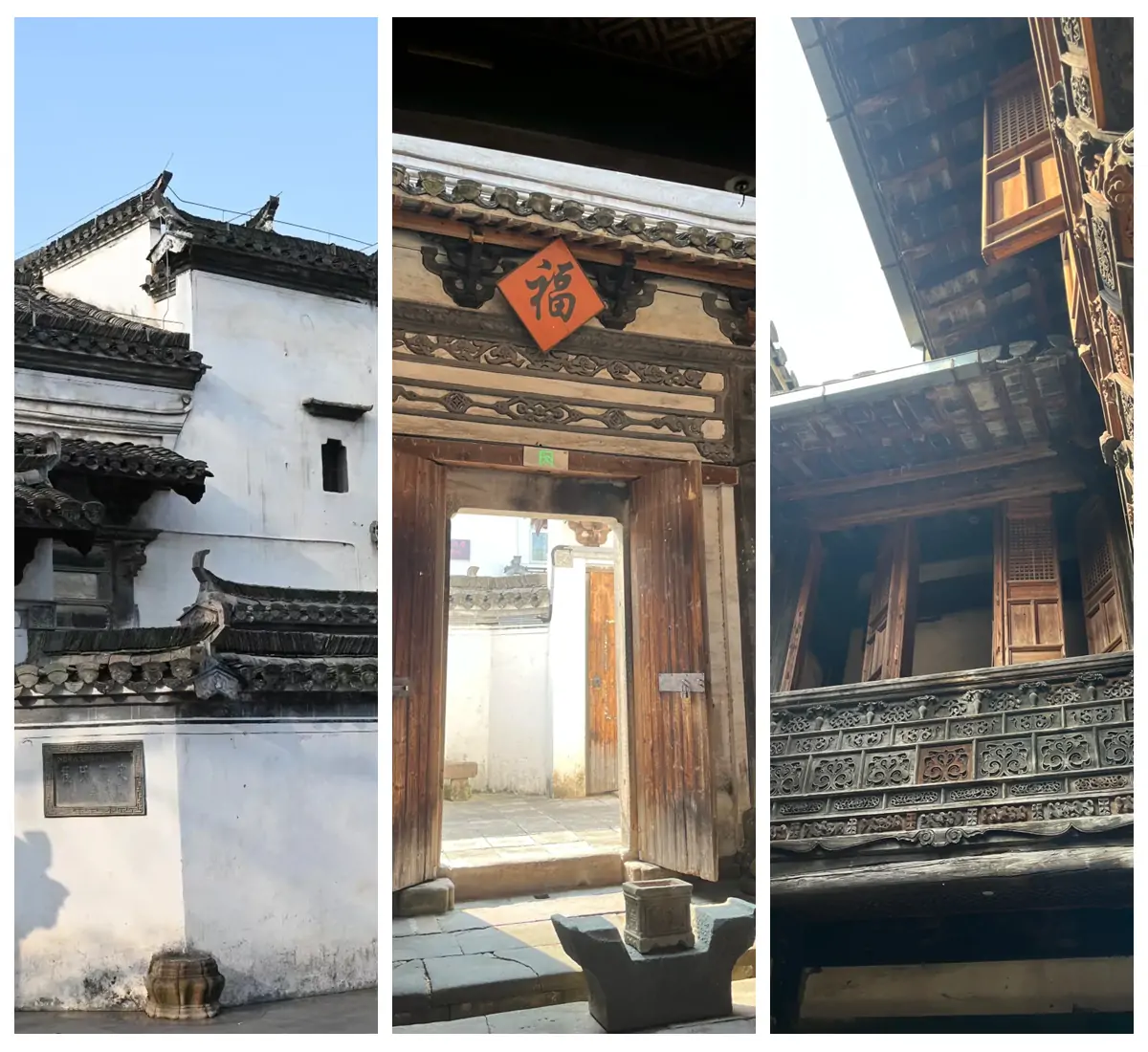
Appreciate Typical Huizhou Architecture and Exquisite Carvings
Tunxi Ancient Street was built during the Song Dynasty and has a history of several hundred years. It is one of the better-preserved ancient streets of Huizhou and one of the best places to appreciate traditional Huizhou architecture.
The street is paved with blue-gray stone slabs, with white-walled, black-tiled buildings, horse-head walls, and wooden shops lining both sides, fully showcasing the unique charm of Huizhou-style architecture. Tunxi Ancient Street is a typical old street where local residents once engaged in business and lived.
You can admire various styles of Ming and Qing dynasty buildings—shops with workshops behind them, shops with warehouses behind them, shops with living rooms behind them, or shops on the first floor and living rooms on the second floor. All houses are drained through skylights because water symbolizes wealth, ensuring it does not flow out. Local residents refer to this as "water flowing back to the main hall from all directions."
As you stroll through the streets, you will find many shops selling calligraphy and other art supplies, wood carvings, tea, and snacks. Some shops display traditional methods of making local delicacies and invite passersby to taste them. Even some shops allow you to experience making handicrafts firsthand, such as Chinese calligraphy brushes. While street-side shops may seem similar at first glance, the advantage is that you can compare prices before deciding where to buy.
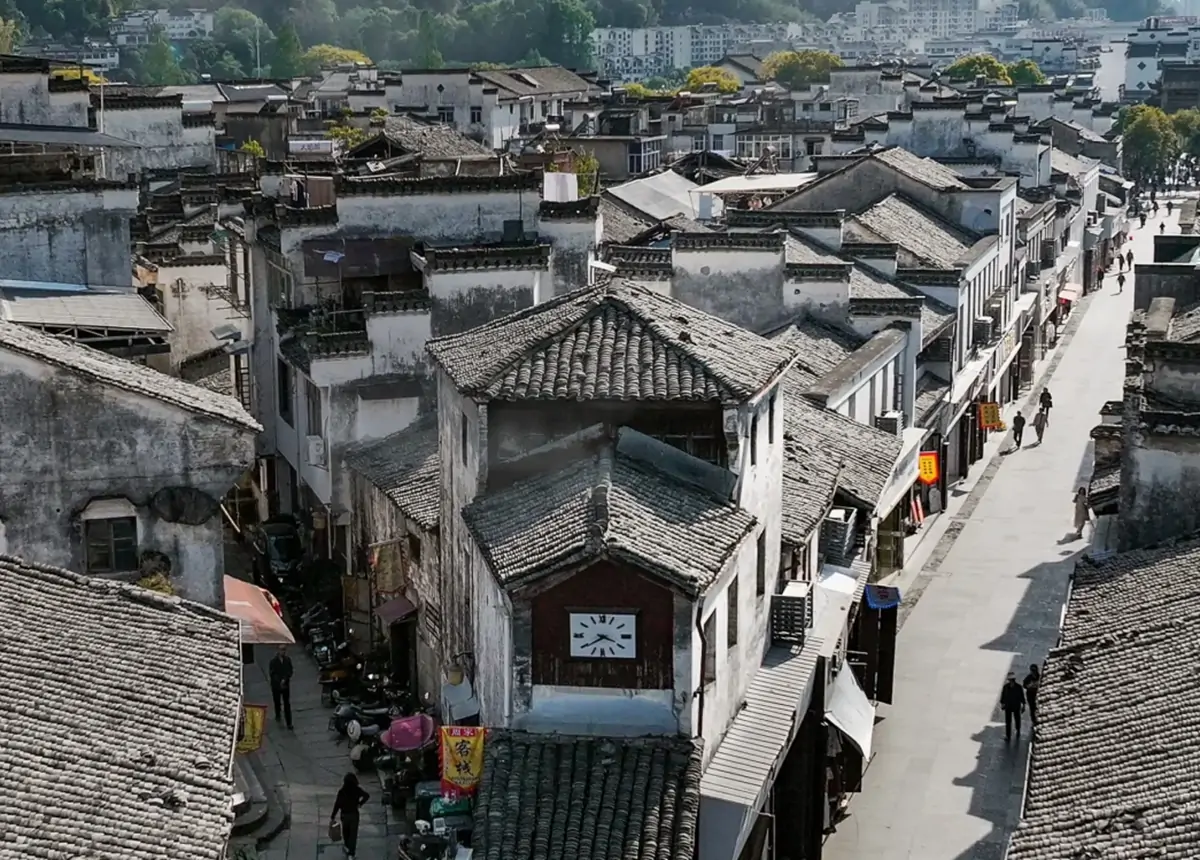
Visiting the Museum and Cheng's Three Residences
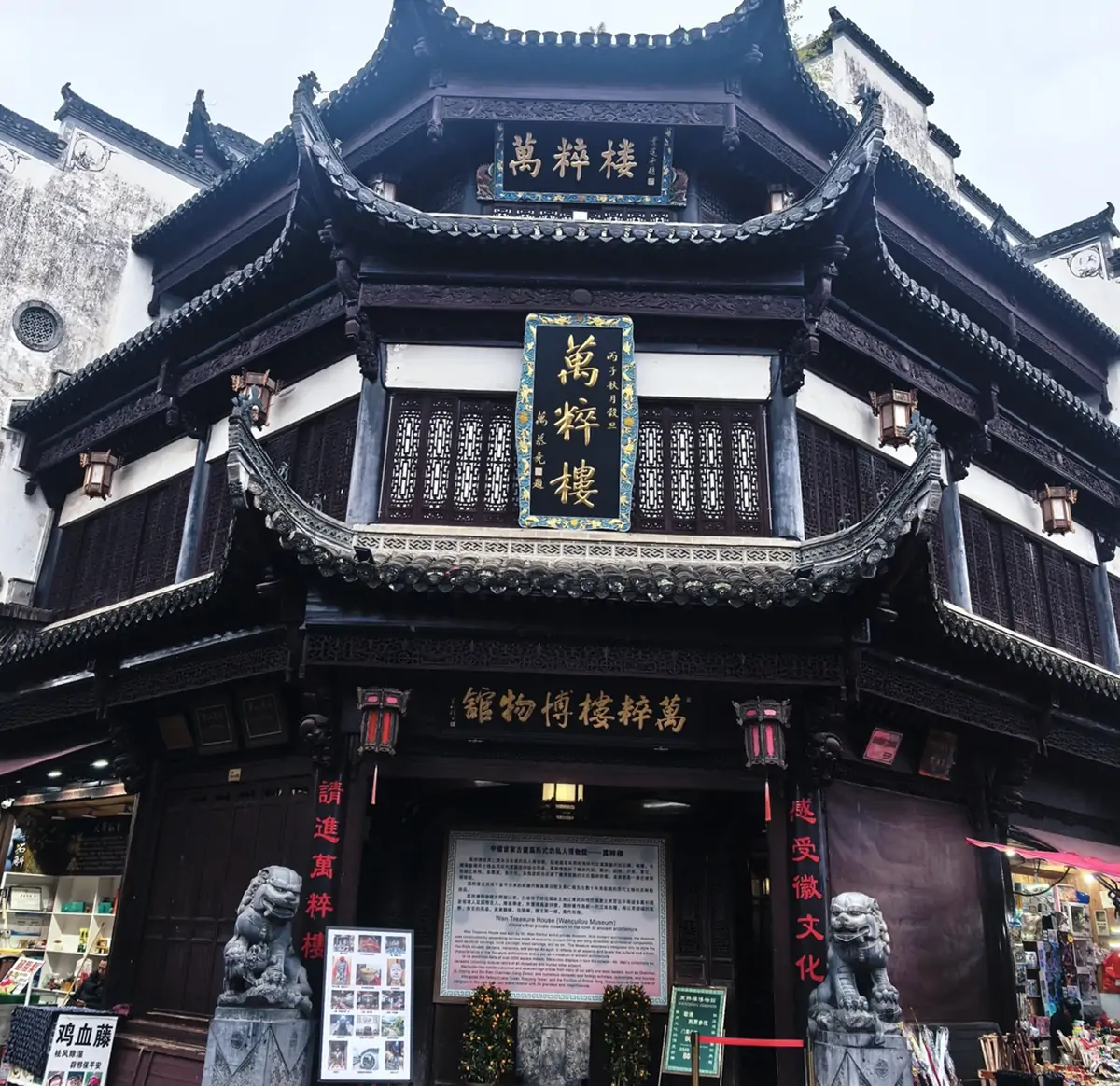
There are two famous museums on Tunxi Old Street. One is the Tunxi Museum, where furniture from the Ming and Qing dynasties is displayed on the first floor, and calligraphy, paintings, and porcelain on the second floor. The other is Wancui Building, a four-story structure and the first private museum in the local area to adopt an ancient architectural style.
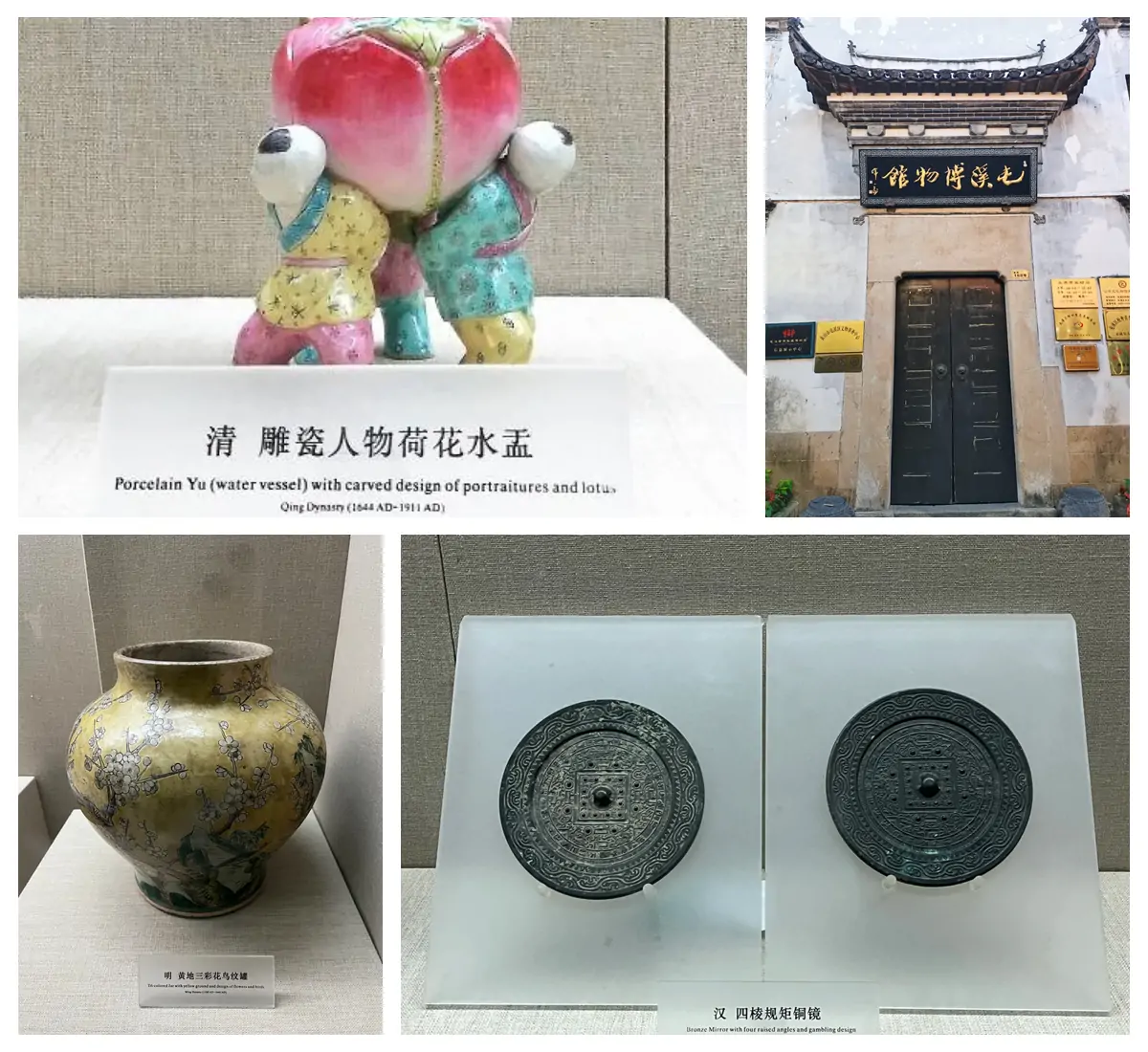
Tunxi Museum
Tunxi Museum is located within the Tunxi Ancient Street scenic area. It is a comprehensive museum integrating history, art, and folk culture and is one of the most worthwhile cultural attractions to visit during Mt Huangshan Tours.
The museum houses a large number of precious cultural relics from the Huizhou region, including Ming and Qing dynasty furniture, ancient calligraphy and paintings, ceramics, jade articles, bronze wares, Huizhou brick carvings, and the Four Treasures of the Study.
Compared with the bustling commercial streets, Tunxi Museum offers a quiet place to understand Huizhou culture. The visit takes about 30–60 minutes and can easily be combined with nearby attractions.(Opening hours: 8:30–17:00.)
Wancuilou
Wancuilou houses a large collection of Huizhou artistic treasures, including wood carvings, brick carvings, stone carvings, plaques, couplets, and classical furniture. It is regarded as an important place for understanding Huizhou folk culture and architecture.
The Three Cheng Mansions
The Three Cheng Mansions are ancient buildings dating back to the Chenghua period of the Ming Dynasty (1465–1487). The three courtyard houses have a history of nearly 600 years and preserve remarkable Huizhou architectural craftsmanship.
(Admission: 30 RMB. Opening hours: 8:30–17:00.)
Taste Local Snacks and Famous Teas
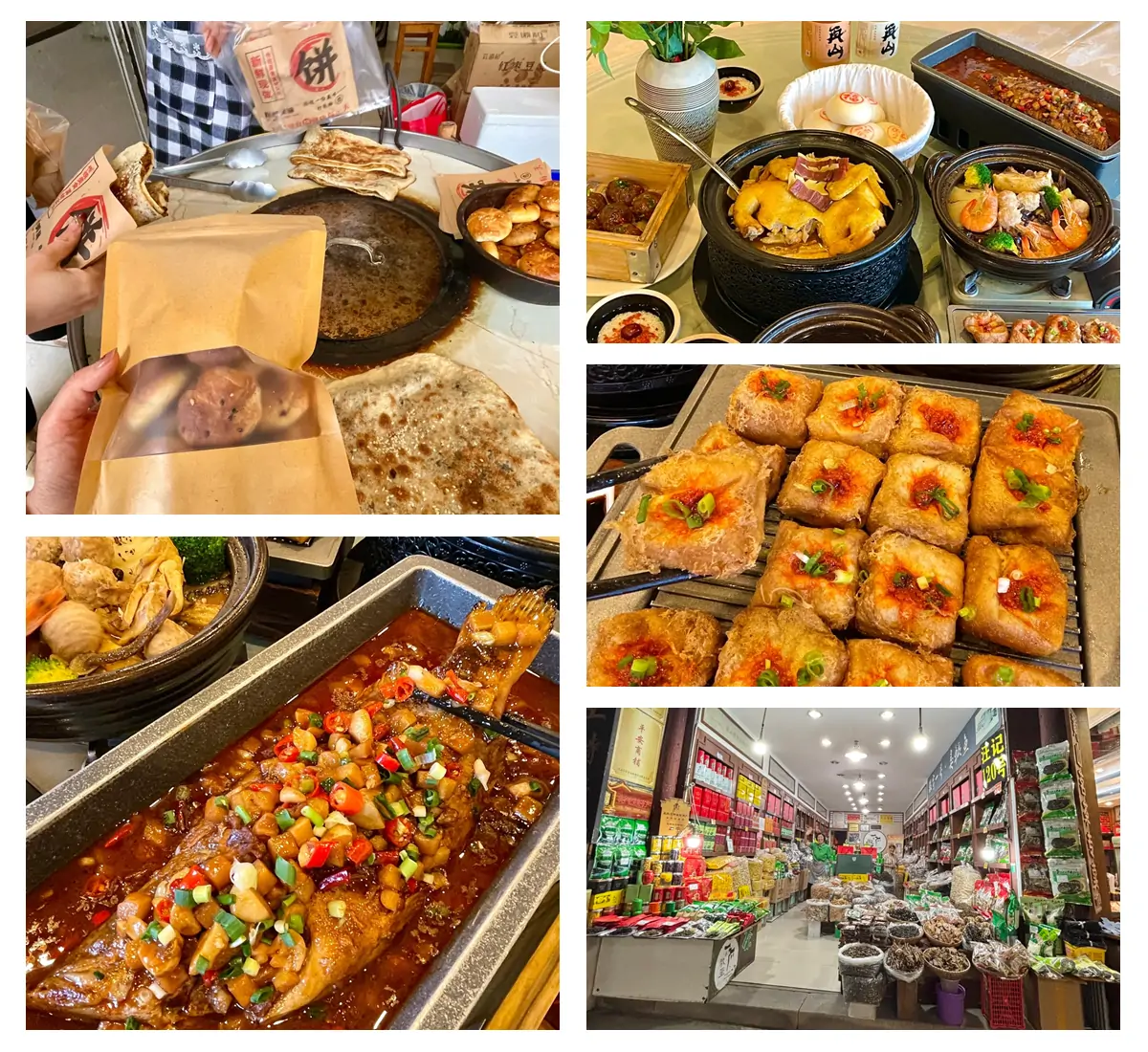
If you are a food lover, Tunxi Ancient Street is one of the best things to do in Huangshan. Here you can enjoy authentic Huizhou cuisine and traditional local snacks.
Representative dishes include stinky mandarin fish, hairy tofu, Huangshan sesame cakes, Huizhou braised duck, Dao Ban Xiang, and kudzu flour balls.
Tunxi Ancient Street is also an important destination for experiencing Huizhou tea culture. Along the street are many traditional tea houses selling Huangshan Maofeng, one of China's Top Ten Famous Teas, as well as Taiping Houkui and Qimen Black Tea.
Many tea houses also provide tea tasting and tea ceremony experiences, allowing visitors to better understand Huizhou tea culture.
You can join us to explore Tunxi Ancient Street, and we will arrange the itinerary for you.
Our E-mail:[email protected] WhatsApp:+86 15347723823 , ++86 15347723823
What Can Be Bought Here
The real charm of Tunxi Ancient Street lies in its lively commercial atmosphere. Unlike a museum, Huangshan Old Street preserves centuries of Huizhou business traditions.
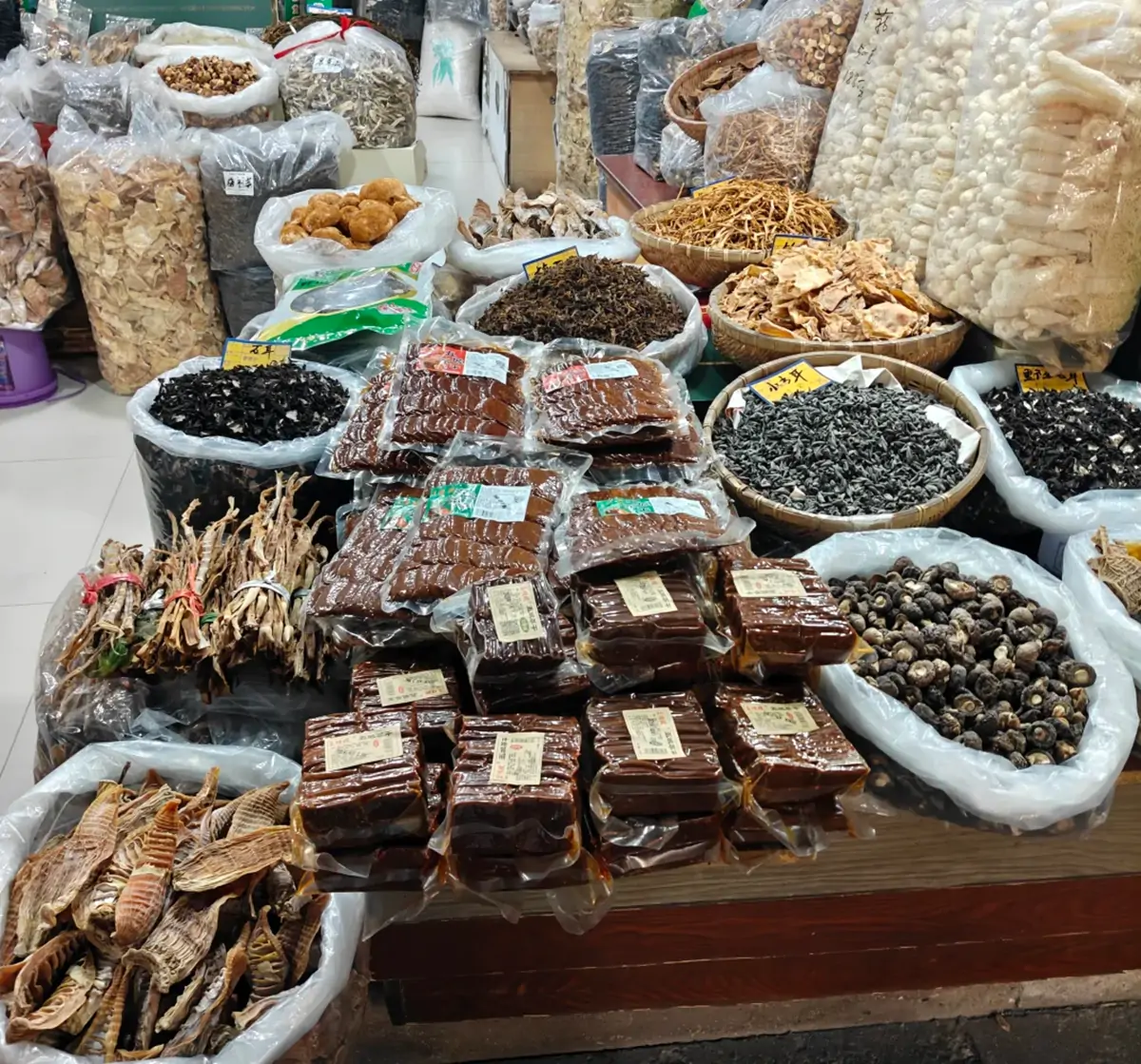
Famous Huangshan Tea
Huangshan Maofeng and Qimen Black Tea are among the most popular local products. Many tea houses provide free tasting before purchase.
Huizhou Four Treasures of the Study
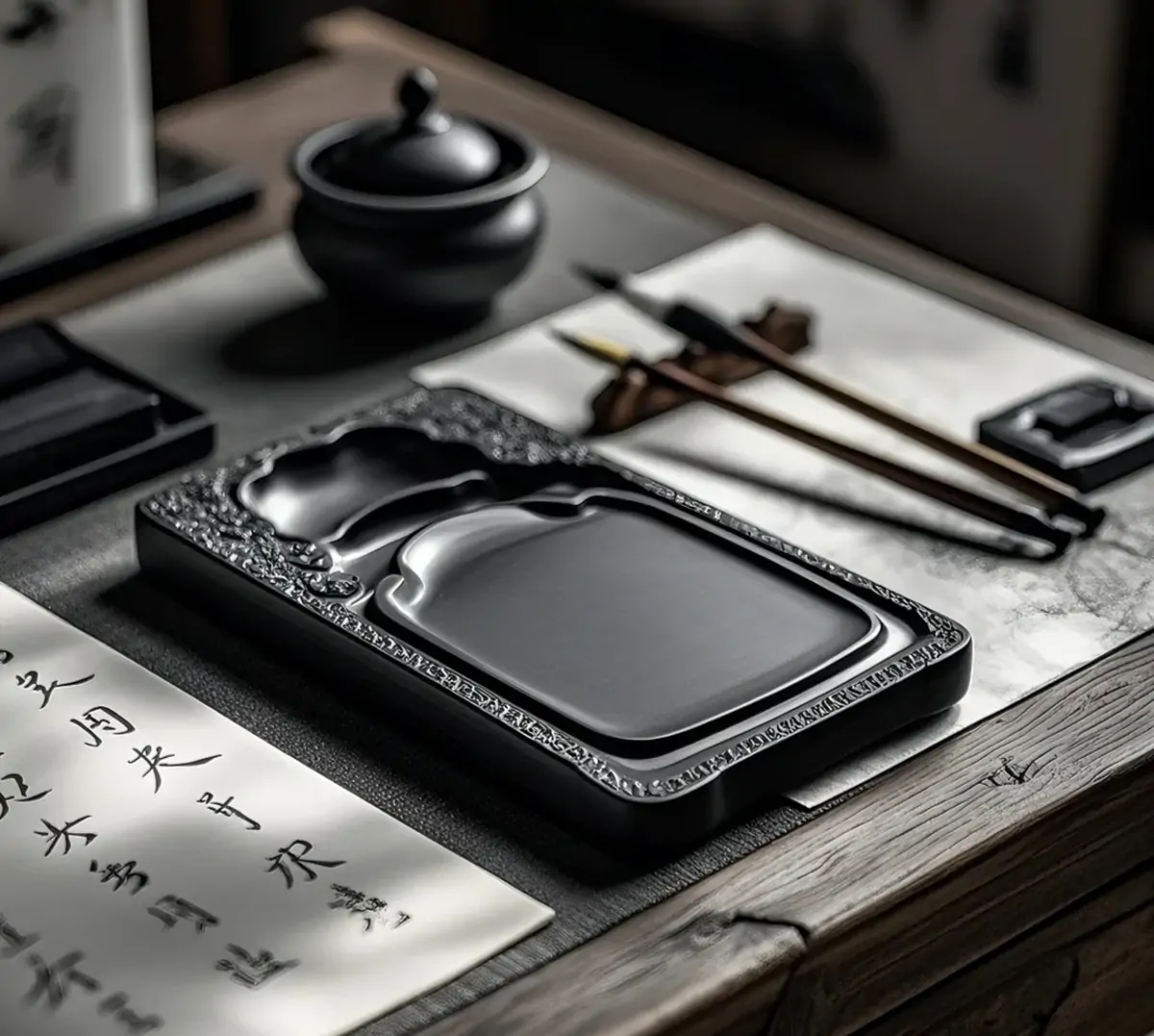
Tunxi Ancient Street is one of the best places to purchase She inkstones, Huizhou ink, brushes, and Xuan paper, making excellent souvenirs for calligraphy enthusiasts.
Antiques and Cultural Souvenirs
Visitors can also purchase Huizhou wood carvings, paintings, seal carvings, folding fans, tea sets, and other cultural souvenirs.
How to Get There
Tunxi Ancient Street is located in the center of Tunxi District, Huangshan City.
• Around 5 km from Huangshan Tunxi Airport
• Around 3.3 km from Huangshan Railway Station
• Around 13.7 km from Huangshan North Railway Station
Visitors can take taxis or buses 1, 3, 5, 8, 11, 12, 15, or 21.
If arriving from Huangshan North Railway Station or Tunxi Airport, a taxi or private transfer takes approximately 30 minutes.
Many travelers choose to visit Tunxi Ancient Street as the first stop of their Mt Huangshan Tours before continuing to Huangshan Scenic Area.
This is one of our Huangshan tour itineraries,You can take a look for reference
·4 Days Huangshan Highlight with Tunxi & Hongcun Tour
Conclusion
For travelers planning Mt Huangshan Tours, Tunxi Ancient Street offers an authentic glimpse into Huizhou culture before visiting Huangshan Mountain. Free to enter and easy to explore on foot, it combines historic architecture, local food, tea culture, museums and traditional shopping into one walkable destination. As evening falls and lanterns illuminate the stone streets, the atmosphere becomes one of the most memorable experiences in Huangshan.Join us for an unforgettable Mt Huangshan tour and experience the beauty, culture, and history of Huangshan.
Our E-mail:Email: [email protected] WhatsApp:+86 15347723823 , ++86 15347723823

FAQ
Q: Is there an entrance fee for Tunxi Ancient Street?
A: As an open historical district, Tunxi Ancient Street typically does not charge an entrance fee, allowing tourists to visit for free. Some museums, exhibition halls, or specific experience projects may have separate charges, generally ranging from 10 to 50 yuan.
Q: What are the must-see attractions at Tunxi Ancient Street?
A: Key highlights include Huizhou-style ancient architecture, Wancui Building, Cheng's Three Mansions, Tunxi Museum, and the scenic appearance of cobblestone lanes. The ancient street lit up with night lights is also a popular photo spot for many tourists.
Q: What is the best time to visit Tunxi Ancient Street?
A: It can be visited year-round, with the most comfortable weather in spring and autumn. It is recommended to enter after 4 PM to experience both the architectural details during the day and the ancient street's night view with lanterns lit.
Q: What local specialties can be bought at Tunxi Ancient Street?
A: Main specialties include Huangshan Maofeng tea, Taiping Houkui tea, Qimen Black Tea, Huizhou ink, Sheyan stone inkstones, Huizhou woodcarvings, and Huangshan Burnt Cakes. These are suitable for personal use as well as souvenirs.
Q: How long should one spend at Tunxi Ancient Street?
A: It is recommended to spend 2–3 hours. If you want to leisurely stroll, take photos, try snacks, and enjoy the night view, you can plan for half a day to a full day, especially in the evening and at night when the atmosphere is best.
Q: What are the must-try foods at Tunxi Ancient Street?
A: Recommended specialty dishes include stinky mandarin fish, fermented tofu, Huangshan Burnt Cakes, Huizhou braised duck, and bamboo shoot braised pork. For snacks, options like burnt cakes, sesame sugar, and kudzu flour balls are available. There are also many well-known old-established shops within the street.